Is Driveway Sealing Worth It In Hillsborough, NC? Pros And Cons Explained
Quick Summary
Driveway sealing offers a low-cost way to refresh a driveway’s appearance and block some UV rays and light moisture, but it needs reapplication every one to two years and does nothing to fix existing cracks or the Piedmont clay movement common around Hillsborough, NC. A polyaspartic polyurea driveway coating bonds into the concrete itself, handles clay soil shifts and freeze-thaw cycles better than sealer, and carries a transferable lifetime warranty.
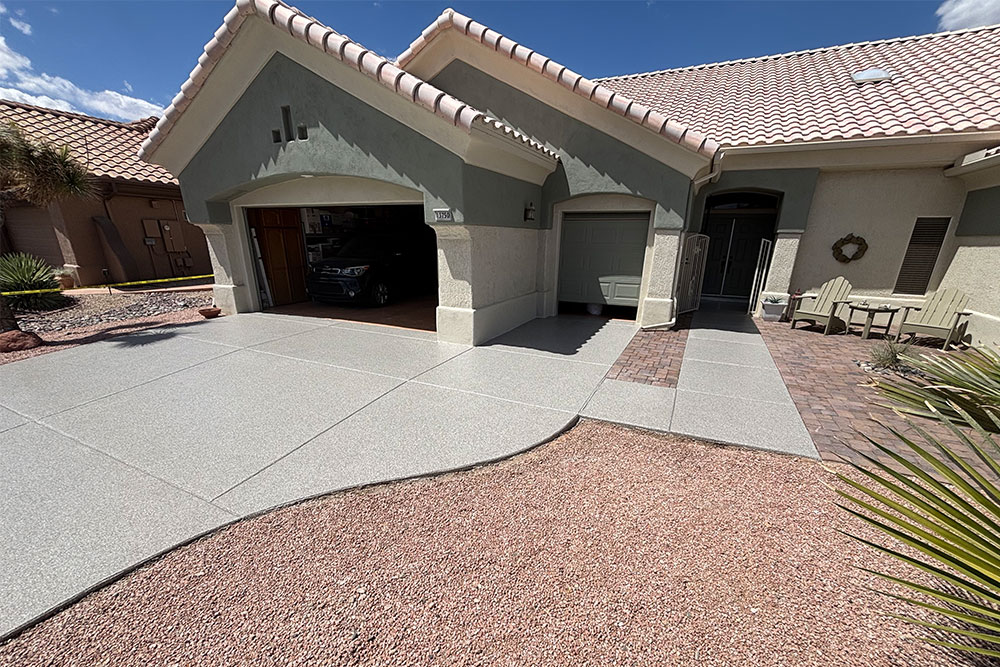
Is driveway sealing worth it for a Hillsborough, NC homeowner staring at a driveway with fading color and a few hairline cracks? The answer depends on the driveway’s current condition and how long you want the results to hold up.
Orange County’s Piedmont clay soil shifts with every wet and dry cycle, and that movement puts real pressure on asphalt and concrete alike. A driveway coating gives homeowners a longer-term point of comparison before committing to a sealer that needs redoing every year or two.
The Pros of Driveway Sealing
Sealing has a few real advantages, which explains why it stays a popular first step for homeowners weighing their driveway options:
Low upfront cost: sealing runs far cheaper than resurfacing or a full coating, making it an easy entry point for a tight budget.
Quick application: most driveways can be sealed in a few hours, with light foot traffic allowed the same day in some cases.
A visual refresh: sealer restores some of the dark, uniform color a driveway had when it was new, hiding light fading from summer sun.
Some UV and moisture protection: a fresh coat blocks a portion of UV rays and light surface moisture for a limited stretch of time.
The Cons of Driveway Sealing
The tradeoffs show up fast once you look past the first season:
Short lifespan: sealer typically needs reapplication every one to two years in a hot, humid Piedmont climate, turning it into a recurring cost rather than a one-time fix.
No structural repair: sealing does nothing for existing cracks, potholes, or settling, so real damage stays exactly where it was.
Tracking risk: sealer that hasn’t fully cured can track onto shoes, tires, and garage floors, creating a mess that spreads well past the driveway itself.
No answer for soil movement: sealing sits on the surface and can’t do anything about the clay soil shifting underneath, which is often the real source of new cracks.
Is Driveway Sealing Worth the Long-Term Cost?
Add up the numbers over a decade and driveway sealing starts to look less like a bargain than it does at first glance. A single sealing job might run a few hundred dollars, but repeating that every one to two years across ten years means paying for the same thin layer of protection five to ten times over, with none of that spending fixing a single crack in the process.
Homeowners often reach for sealing because the upfront number looks small, but the real cost shows up in how many times a crew needs to come back and redo the same surface-level job. A coating installed once, backed by a transferable lifetime warranty, removes that repeat expense from the equation entirely, even though the first invoice runs higher than a single sealing appointment.
What This Means for Hillsborough Homeowners
Orange County sits squarely in the Piedmont, where red clay soil expands when saturated and contracts during dry stretches throughout the year. That constant movement travels into a driveway slab regardless of what sits on top of it, and sealing has no way to compensate for it.
Hillsborough’s older homes and historic district add another layer to the equation, since many driveways in the area were poured decades before today’s moisture and drainage standards became common practice. Rolling terrain around town also means water runs toward low points instead of draining evenly, putting extra pressure on driveways positioned at the bottom of a slope.
Add in occasional winter freezes that send water in surface cracks expanding as ice, and a sealed driveway in this climate tends to show new damage within a couple of seasons regardless of how often it gets resealed afterward.
A Longer-Lasting Alternative: Polyaspartic Polyurea Driveway Coating
A proprietary polyaspartic polyurea coating addresses the exact weak points sealing can’t touch. The material bonds into the surface of the concrete itself rather than sitting on top of it, and it stays flexible enough to move with the slab as Piedmont clay shifts through the seasons. That flexibility is why it resists the cracking that catches up with rigid sealers and overlays after a year or two.
The coating also stays 100% UV stable, so it won’t fade or yellow through long Hillsborough summers the way sealer does. Aggregate color chips broadcast into the base coat add slip resistance that a plain sealed surface doesn’t offer. Installation wraps up in a single day, with the driveway ready to walk on within hours and open to vehicle traffic the next day, backed by a transferable lifetime warranty instead of a yearly reapplication schedule.
Let Guardian Garage Floors Coat Your Hillsborough Driveway
We built our polyaspartic polyurea coating for homeowners tired of the sealing cycle and ready for something built to hold up to Piedmont clay and Hillsborough weather. Our full-time, trained installers handle every driveway themselves, no subcontractors, and plenty of homeowners pair the project with a garage floor coating while the crew is already set up on site.
A free flooring estimate starts with an in-home visit, so you know exactly what your driveway needs before any work gets scheduled. Ready to stop sealing every year and get a driveway that holds up for good? Request your free driveway estimate today.
FAQs
How often does a driveway need to be resealed?
Most sealers need reapplication every one to two years in a hot, humid climate like Hillsborough’s, though heavy sun exposure or vehicle traffic can shorten that window further.
Does sealing help with cracks that are already there?
No. Sealing sits on top of the surface and doesn’t fill or repair existing cracks, potholes, or settled areas, so any structural damage stays in place after sealing.
Is a polyaspartic polyurea coating more expensive than sealing?
The upfront cost is higher than a single sealing appointment, but it replaces years of repeat sealing visits with one installation backed by a transferable lifetime warranty, which changes the math over the long run.