Why Polyurea Basement Floor Coating Is The Best Choice In Greensboro, NC
Quick Summary
Polyurea basement floor coating bonds into concrete rather than sitting on top of it, which lets it flex with a slab as Piedmont clay soil expands and contracts through the seasons. Paint, vinyl tile, and standard epoxy tend to lift, bubble, or trap moisture underneath in a Greensboro basement, while polyurea resists that failure point and carries a transferable lifetime warranty.
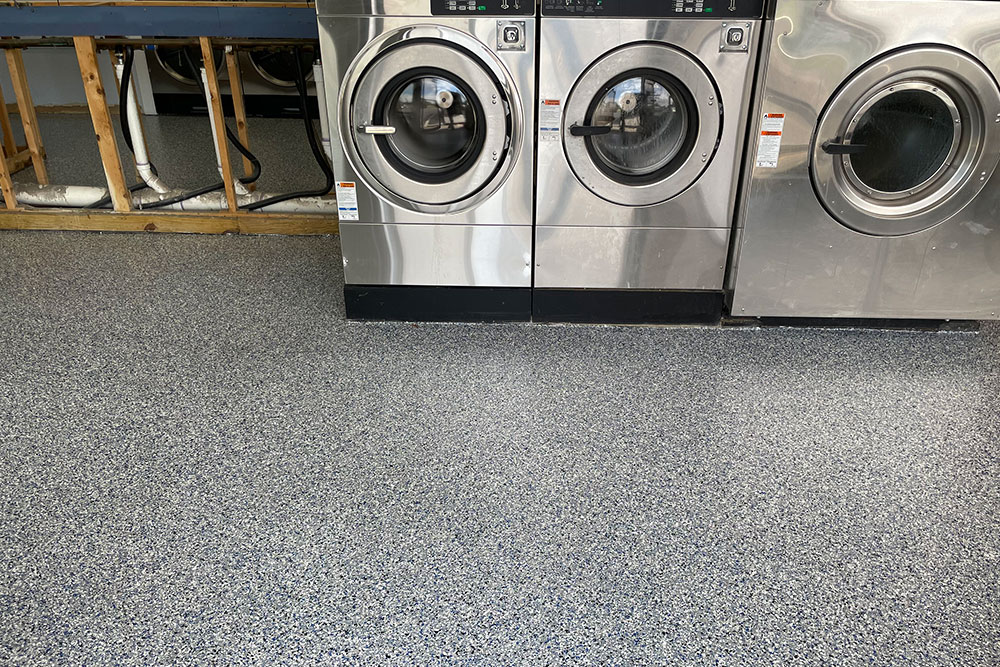
Polyurea basement floor coating stands up to conditions that break down almost every other basement flooring option sold in Greensboro, NC. Piedmont red clay soil swells and shifts with every heavy rain, and that movement travels straight into a basement slab sitting below grade.
A basement floor coating built to bond into concrete rather than rest on top of it holds up where paint, vinyl tile, and standard epoxy give out within a few years.
What Makes Greensboro Basements Prone to Moisture Problems
Guilford County sits on heavy Piedmont clay, a soil type that swells when saturated and contracts during dry stretches. That constant shift puts pressure on foundations and slabs, opening small cracks that let moisture into a basement over time.
Greensboro’s older housing stock adds to the problem, since many basements were built decades ago without the vapor barriers or drainage systems that newer construction includes as standard. The area sees roughly 42 inches of rain a year, with spring and summer storms often arriving in short, heavy bursts rather than steady drizzle, which sends a sudden surge of water into the soil surrounding a foundation.
Combine that with hot, humid summers and a fair share of heavy spring and fall rain, and a below-grade slab spends much of the year fighting moisture from multiple directions at once.
Why Other Basement Flooring Options Fall Short
Paint and thin sealers sit directly on top of concrete. Once water works its way up through the slab, that thin layer lifts, peels, or flakes within a season or two, leaving behind a patchy, unfinished look. Carpet and vinyl tile trap moisture underneath instead of letting it evaporate, creating a setup for mold and mildew that often goes unnoticed until a musty smell shows up weeks or months later.
Standard epoxy runs into a similar issue: it forms a rigid film on the surface that can bubble or delaminate when trapped vapor pushes against it from below. It’s a problem that shows up more in basements than anywhere else in a house. Bare, uncoated concrete dusts constantly and stains the moment anything gets spilled on it, making it a poor long-term choice for a finished living space that a family spends real time in.
Why Polyurea Basement Floor Coating Is the Better Choice
A proprietary polyaspartic polyurea blend absorbs into the surface of ground concrete instead of forming a separate layer on top, which removes the main failure point that paint and epoxy run into. The material stays flexible as the slab shifts with clay soil movement, so it resists cracking rather than lifting away from the surface.
That flexibility also helps the coating resist mold and mildew growth, since there’s no gap or seam underneath for moisture to collect and sit. Homeowners get a finished basement floor backed by a transferable lifetime warranty, a level of coverage that plain sealers and standard epoxy products seldom come close to matching. The finish also holds its color and texture for the life of the slab, so there’s no repeat sealing or touch-up work added to a homeowner’s yearly to-do list.
What a Finished Basement Adds to a Greensboro Home
A basement that stays dry and finished turns into real living space instead of a storage area homeowners avoid. Home gyms, media rooms, and home offices are common uses for a coated basement in the Piedmont Triad, especially during the hottest summer stretches when a below-grade room stays noticeably cooler than the rest of the house.
That extra square footage also plays into resale value down the road, since buyers in the Greensboro market increasingly ask about finished basement space during a home search. A floor that resists moisture and wears well for decades protects that investment instead of turning into a recurring repair cost every few years.
Installation Built for Below-Grade Spaces
Every basement job starts with a moisture reading on the slab, since trapped moisture below the surface is the top reason coatings fail early in a below-grade room. From there, technicians grind the concrete with diamond disks to open the surface and remove old paint, glue, or flooring residue, then fill any cracks with a fast-setting polyurea before the base coat goes down.
Most residential basements are completed in a single day, with the floor ready to walk on within a few hours and fully usable the next day.
What to Expect When You Work With Guardian
Guardian installers are full-time employees, not subcontractors, which keeps quality consistent from one basement to the next across Greensboro and the surrounding Piedmont Triad. Many homeowners pair a basement project with a garage floor coating upstairs, since both spaces deal with similar moisture and durability demands.
A free flooring estimate starts the process with an in-home visit, where a technician tests the slab and walks through color and finish options before any work gets scheduled.
Let Guardian Garage Floors Protect Your Greensboro Basement
We built our polyurea basement floor coating around exactly the kind of clay soil movement and humidity Greensboro basements deal with every year. Our full-time, trained installers handle each project themselves from start to finish, and every finished floor carries a transferable lifetime warranty that holds up through decades of Piedmont weather.
From the first moisture test through the final seal coat, we walk homeowners through each step so nothing about the process feels like a guessing game. Ready to stop fighting moisture in your basement and start using the space year-round? Request your free basement estimate today.
FAQs
Does polyurea basement coating stop water from coming through the floor?
The coating resists moisture far better than paint or bare concrete, but it works alongside proper drainage and a sump pump rather than replacing them. Active water intrusion still calls for addressing the source directly.
How is polyurea different from epoxy for a basement floor?
Polyurea bonds into the concrete itself and stays flexible with the slab, while epoxy sits on top as a rigid layer that can bubble or peel when moisture pushes up from underneath.
How soon can I move furniture back into a coated basement?
Most basements are ready to walk on within a few hours of the final coat and fully usable, including furniture, within 24 hours of completion.