Epoxy Flooring Vs. Polished Concrete: Which Is Right For Your Space?
Quick Summary
Epoxy flooring and polished concrete both improve the look of plain concrete, but they perform very differently over time. Epoxy and polyaspartic polyurea floor coatings create a sealed, durable surface built for heavy use, while polished concrete offers a more natural industrial appearance with less surface protection. The better fit depends on traffic levels, maintenance expectations, design preferences, and how the space functions every day.
Concrete floors do far more than support foot traffic. They shape the appearance of a space, influence maintenance demands, and take constant abuse from vehicles, equipment, spills, and heavy daily use. In garages, warehouses, retail stores, and restaurants, the floor often becomes one of the hardest-working surfaces in the entire building.
That is why flooring decisions deserve more thought than many people initially expect.
Two options continue dominating the conversation in modern concrete flooring: epoxy flooring systems and polished concrete. Both improve the appearance of bare concrete, but they approach the job in completely different ways. One focuses heavily on protection and durability. The other leans into a cleaner industrial aesthetic with a more natural finish.
The right choice usually comes down to how the space will actually be used over the long term.
What Epoxy Flooring Brings to a Space
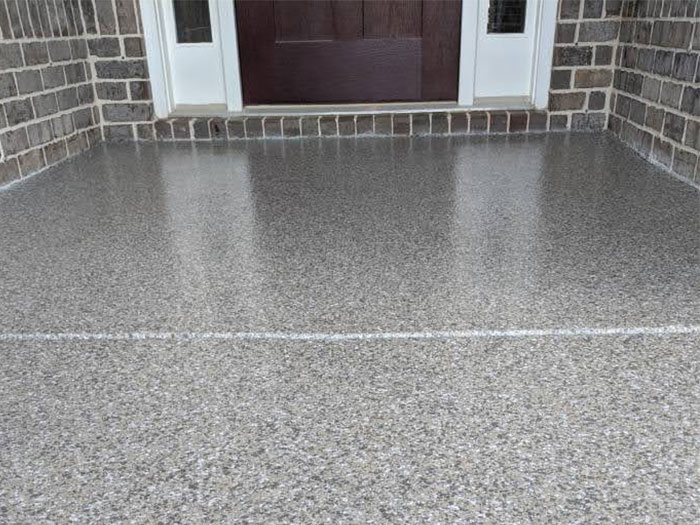
Epoxy flooring creates a protective layer over the concrete surface itself. Once installed, the coating bonds directly with the slab to form a smooth, durable finish designed to handle daily wear.
Modern coating systems often include advanced polyaspartic polyurea technology, which delivers stronger durability, better flexibility, and faster installation times compared to traditional epoxy-only products.
That protective barrier helps shield concrete from:
- Oil stains
- Tire marks
- Chemical spills
- Surface abrasion
- Moisture intrusion
- UV-related discoloration
The result is a floor that stays cleaner, looks sharper, and handles demanding environments far better than unfinished concrete.
That is one reason garage floor coatings and commercial floor coating systems have become increasingly popular in both residential and business settings.
Why Some Property Owners Prefer Polished Concrete
Polished concrete takes an entirely different approach. Instead of applying a coating over the slab, contractors mechanically grind and polish the existing concrete until it develops a smooth reflective finish.
The final appearance feels more industrial and minimalist.
Many retail stores, loft-style interiors, and modern commercial buildings choose polished concrete because of that raw architectural style. It creates a clean appearance without adding decorative coatings or layered finishes over the slab.
There is also less material involved in the process itself, which appeals to some property owners looking for a simpler flooring system.
Still, polished concrete does not offer the same level of surface protection found in coated flooring systems.
Durability Changes the Conversation Quickly
Concrete flooring faces constant punishment in busy environments.
Garage floors deal with hot tires, dropped tools, oil leaks, and road salt. Warehouses handle rolling equipment and heavy pallet traffic. Restaurants experience grease, moisture, spills, and nonstop foot traffic throughout the day.
That is where coated flooring systems begin separating themselves from polished concrete.
A polyaspartic polyurea coating acts as a durable barrier between the concrete and everything happening above it. Instead of allowing contaminants and wear to affect the slab directly, the coating absorbs much of that daily abuse first.
Polished concrete remains more exposed. Scratches, staining, dull traffic paths, and surface wear tend to become more noticeable over time, particularly in high-traffic commercial settings.
For spaces exposed to constant use, durability often becomes one of the biggest deciding factors.
Appearance Matters More Than Expected
Flooring dramatically changes how a space feels.
Polished concrete delivers a sleek industrial appearance with subtle natural variation throughout the slab. It works especially well in contemporary commercial spaces aiming for a clean, minimalist atmosphere.
Epoxy flooring systems offer much more customization. Decorative flake blends, textured finishes, and custom color combinations create a polished appearance that feels far more tailored to the property itself.
For residential garages, that can completely change the space from dull storage area to something that feels clean and refined. In commercial environments, flooring can also support branding, customer experience, and the overall appearance of the business.
The visual difference between the two systems becomes obvious almost immediately after installation.
Maintenance Can Influence Long-Term Satisfaction
Maintenance demands tend to shape how property owners feel about their flooring years later.
Polished concrete requires regular cleaning and occasional polishing to maintain its reflective appearance. High-traffic areas may gradually lose some shine and develop visible wear patterns.
Coated flooring systems are generally easier to maintain because the sealed surface resists dirt, moisture, and staining more effectively. Dust and debris stay on the surface instead of collecting inside porous concrete.
That lower-maintenance advantage matters in garages, restaurants, healthcare facilities, retail stores, and industrial environments where cleanliness and appearance play a major role every day.
FAQs
Polished concrete sometimes carries a lower upfront cost, but long-term maintenance and durability should also factor into the decision.
Polyaspartic polyurea floor coating systems generally perform better in high-traffic environments because they provide stronger resistance to impacts, stains, and surface wear.
Polished concrete is more stain-resistant than unfinished concrete, but it still remains more vulnerable to staining compared to sealed coating systems.
Upgrade Your Concrete Floors with Guardian Garage Floors
At Guardian Garage Floors, our proprietary polyaspartic polyurea coating systems are designed to outperform traditional epoxy flooring in both durability and long-term appearance. Engineered to be up to 20 times stronger than epoxy and five times more flexible, these coatings are built to handle hot tires, chemical spills, heavy traffic, impacts, and UV exposure without peeling, fading, or breaking down over time.
Installed in just one day by professionally trained in-house crews, our flooring systems create a seamless, easy-to-clean surface for garages, patios, warehouses, restaurants, healthcare facilities, retail spaces, and industrial properties. Backed by a transferable lifetime warranty, our polyaspartic polyurea floors are designed for property owners who want lasting performance instead of short-term fixes.
Request a free estimate today.