A Guide To Choosing Concrete Patio Flooring In Fuquay-Varina, NC
Quick Summary
Concrete patio flooring options range from bare slabs and pavers to stamped concrete and polyaspartic polyurea coatings, each with different levels of durability, upkeep, and resistance to heat, humidity, and freeze-thaw cycles common across the Piedmont. Polyaspartic polyurea coatings hold up to UV exposure, moisture, and temperature swings better than paint, epoxy, or uncoated concrete, giving homeowners in Fuquay-Varina, NC a low-maintenance outdoor space built to last for years.
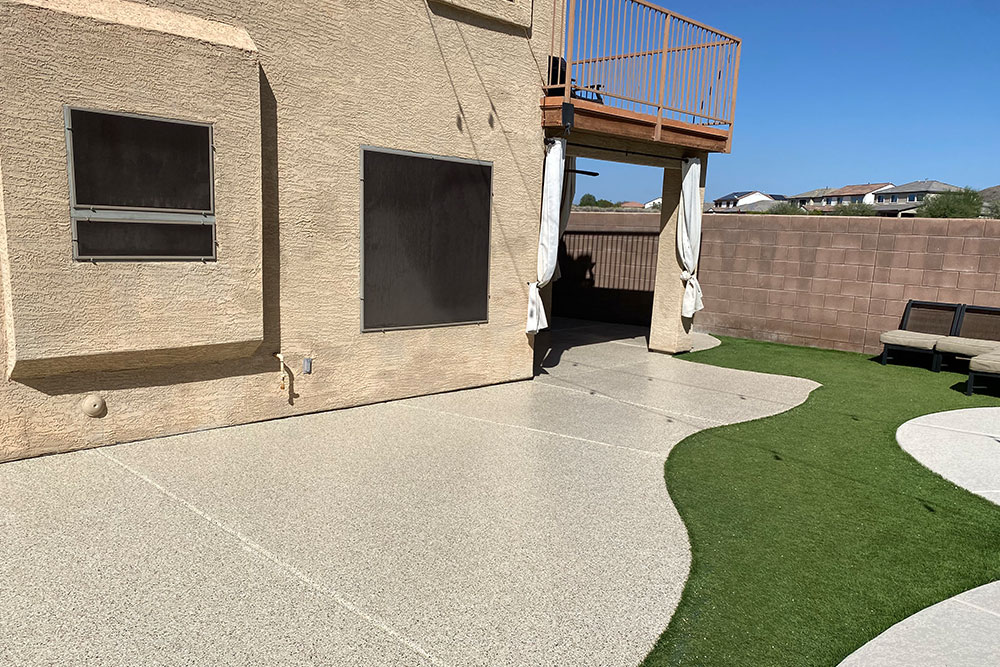
Choosing concrete patio flooring in Fuquay-Varina, NC starts with understanding what Piedmont weather does to an outdoor slab. Hot, humid summers, sudden downpours, and the occasional hard freeze put real strain on any surface left exposed to the elements year-round.
A concrete patio coating holds up long after paint, sealers, and DIY kits start to fade, and knowing what separates one flooring option from another makes the decision a lot easier before crews show up with equipment.
What Fuquay-Varina’s Climate Does to a Concrete Patio
Wake County sits in the heart of the Piedmont, where clay-heavy soil expands and contracts with rainfall and temperature swings throughout the year. That movement travels straight into a concrete slab, opening hairline cracks over a few seasons even on a well-poured foundation.
Summer humidity pushes moisture up through the pores of the concrete, and without a proper barrier, that moisture shows up as mildew, discoloration, or a slick surface after a storm rolls through. Winter brings occasional freezing nights, and water trapped inside untreated concrete expands as it turns to ice, widening existing cracks bit by bit with each cold snap.
Add in the region’s share of thunderstorms and high pollen counts each spring, and a patio surface has to shed water, resist staining, and survive temperature swings all at once. This combination of clay soil, high humidity, and freeze-thaw cycles is a lot to ask of a bare or poorly sealed patio, which is why so many outdoor slabs in the area start showing wear within just a few years of the original pour.
Comparing Your Concrete Patio Flooring Options
Homeowners weighing patio flooring in this area usually land on one of five paths, and each comes with a different balance of upfront cost and long-term upkeep:
Bare or sealed concrete: budget-friendly upfront, but sealers wear down within a year or two under UV and foot traffic, calling for reapplication on a repeating schedule that adds up over time.
Pavers and natural stone: attractive and long-wearing, though individual pieces shift with soil movement and gaps invite weeds and ant colonies that spread across a whole patio surface.
Stamped concrete: adds texture and pattern at installation, but still relies on a sealer coat that fades and peels with sun and rain exposure within a few seasons.
Epoxy coatings: common indoors, but outdoor epoxy tends to yellow under direct sun and can turn brittle in cold weather, leading to peeling along the edges first.
Polyaspartic polyurea coatings: absorb into the surface of the slab rather than sitting on top, resist UV rays without yellowing, and flex with the concrete instead of cracking under pressure.
Cost, appearance, and upkeep all play into the decision, but the surface still has to handle Piedmont clay movement and summer humidity without breaking down within the first few years of ownership.
Why Polyaspartic Polyurea Fits Fuquay-Varina Patios
A proprietary polyaspartic polyurea blend bonds into ground concrete rather than resting on top of it, part of why it resists peeling in a way paint and epoxy typically can’t manage over several seasons. The coating stays 100% UV stable, so hours of direct North Carolina sun won’t turn it yellow or brittle over time, even through the longest summer stretches.
Aggregate color chips broadcast into the base coat add slip resistance underfoot, a real plus around a pool or grill station after a summer storm leaves the surface wet. Installation wraps up through a concrete coating installation that finishes in a day, with the patio ready to walk on within hours and open for full use the next day.
Long-Term Upkeep Across a Humid Climate
Maintenance is where the real difference between options shows up over the years. Sealed concrete needs a fresh coat every one to two years, or the surface starts absorbing moisture again. Pavers need occasional relaying as soil shifts underneath, plus regular weeding between joints. Stamped concrete calls for the same resealing cycle as plain concrete, with the added risk of the pattern wearing unevenly near doors and steps.
Polyaspartic polyurea skips most of that upkeep. Routine cleaning with soap and water keeps the surface looking fresh, and it doesn’t need periodic resealing the way paint-based products do. The same low-upkeep advantage carries over to other outdoor spaces, including driveway coating that stands up to vehicle weight and road salt the way a patio coating stands up to pool furniture and grill heat.
What to Look for When Choosing a Patio Coating Contractor
A patio coating is only as good as the prep work behind it. Before signing on with anyone, ask how they test moisture levels in the slab, since trapped moisture is often the real reason coatings fail within a year or two of installation.
Full-time, trained installers tend to produce a more even bond than a rotating crew of subcontractors.
Let Guardian Garage Floors Handle Your Fuquay-Varina Patio
We built our polyaspartic polyurea coating for exactly the kind of weather Fuquay-Varina sees every year, from humid summer afternoons to the occasional hard freeze. Our full-time, trained installers handle every square foot themselves, no subcontractors involved. We back the finished patio with a transferable lifetime warranty that travels with the home if you sell down the road.
From the free in-home consultation through the final seal coat, we walk you through every step so there’s no guesswork on your end and no surprises once the crew arrives. Ready for a patio that holds its color and shape through Piedmont summers and winters alike? Request your free patio estimate today.
FAQs
How long does a polyaspartic polyurea patio coating last?
With proper prep and installation, the coating carries a lifetime warranty and typically outlasts paint, sealers, and standard epoxy by a wide margin, often for the life of the concrete slab itself with minimal upkeep along the way.
Can a patio coating go over an existing stamped or stained patio?
In most cases, yes, once the surface gets ground down to bare concrete. Grinding removes old sealers and stains and opens the pores so the new coating bonds directly to the slab instead of sitting on a failing layer underneath it.
Is polyaspartic polyurea slippery when wet?
No. Aggregate color chips broadcast into the base coat create texture underfoot, which helps with grip around pools, grills, and outdoor kitchens even right after a summer rainstorm passes through.