Exploring Industrial Floor Coating Options In Wilson, NC
Quick Summary
Industrial floor coating options for Wilson, NC facilities include epoxy, polished concrete, industrial paint, and polyaspartic polyurea, each offering a different balance of chemical resistance, cure time, and durability under forklift and machinery traffic. Polyaspartic polyurea installs faster than epoxy, resists abrasion and chemical spills better than polished concrete or paint, and carries a transferable lifetime warranty suited to round-the-clock industrial use across manufacturing plants, warehouses, and distribution centers alike.
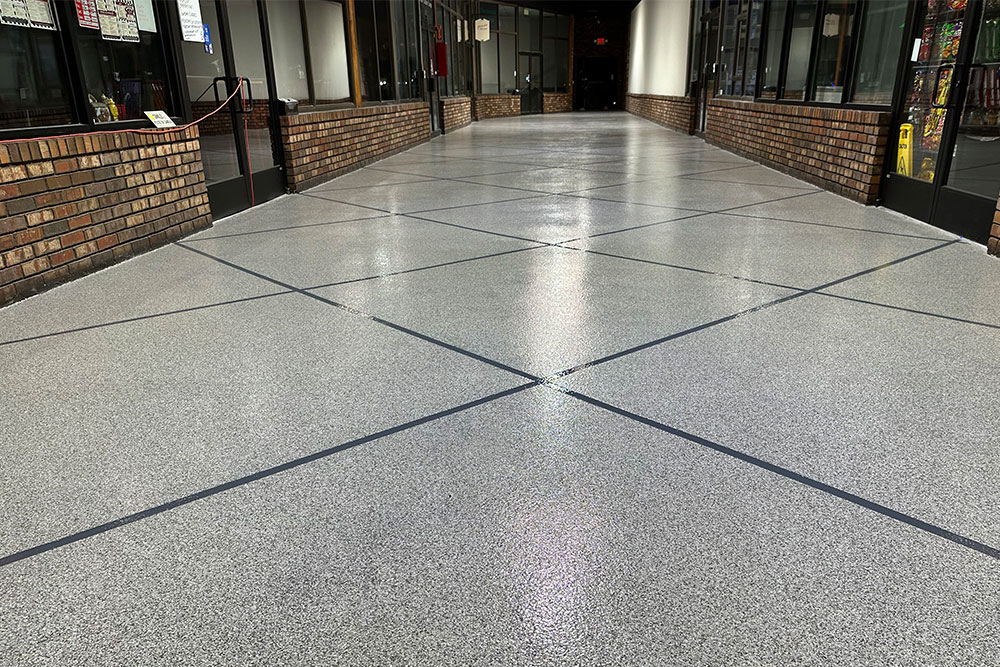
Industrial floor coating decisions carry more weight in Wilson, NC than in most residential settings, since a facility floor deals with forklift traffic, chemical exposure, and near-constant use that a garage or patio never sees.
Wilson County’s manufacturing and logistics base along the I-95 corridor puts real demands on concrete floors day in and day out, across shifts that run late into the night. Floor coating built for that kind of pressure holds up where standard paint and thin coatings wear through within a year or two of daily operation.
What Wilson’s Industrial Facilities Need from a Floor
Wilson shifted from a tobacco-driven economy decades ago into a broader manufacturing and distribution base. That shift brought a wider mix of facility types into the area, from production plants to large-scale warehousing and cold storage operations near the rail and highway routes running through the county.
Floors in these buildings deal with forklift wheels, pallet jacks, dropped tools, and the occasional chemical or oil spill on a daily basis, often across three shifts running around the clock without much of a break in between.
Wilson’s hot, humid summers add another layer of pressure, since moisture can work its way through a slab-on-grade floor in older buildings without a proper vapor barrier. This leads to surface bubbling or peeling in coatings that aren’t built to handle it.
On top of the physical demands, most facilities can’t afford extended downtime for a flooring project, which makes installation speed just as important as the coating’s long-term durability when a decision gets made about which product to use.
Common Industrial Floor Coating Options
Facility managers in Wilson typically weigh a handful of flooring options before settling on one for a new build or a renovation project:
Epoxy: widely used and reasonably priced, but standard epoxy can turn brittle under heavy impact, chip near equipment traffic lanes, and requires several days to cure before a floor sees full use again, which adds up to real lost production time.
Polished concrete: a clean, low-maintenance look suited to showroom floors and office areas, though it offers little protection against chemical spills or staining in a working production space and can become slick when wet.
Industrial floor paint: the cheapest option upfront, but it wears through fast under forklift and machinery traffic, often needing a fresh coat within a single year of heavy use and adding a recurring line item to a maintenance budget.
Polyaspartic polyurea: cures in a single day, flexes under heavy loads instead of cracking, and resists chemical spills, oil, and abrasion better than the other three options combined, without the multi-day shutdown epoxy often requires.
Why Polyaspartic Polyurea Comes Out Ahead for Wilson Facilities
Downtime is the first thing most facility managers ask about, and polyaspartic polyurea has a real advantage here. Installation typically finishes in a single day, with the floor ready for foot traffic within hours and full equipment use the next day, compared to the multi-day cure window standard epoxy needs before it can handle a loaded pallet jack.
The coating also stays flexible enough to handle the weight and vibration of forklifts and heavy machinery without cracking the way rigid epoxy sometimes does after repeated impact in the same traffic lanes.
Chemical spills, oil, and general abrasion from daily operations don’t stain or wear through the surface the way they do with paint or bare concrete. The low-odor formula also makes it practical to install in a facility that can’t fully shut down operations during the project, section by section if needed.
What Installation Looks Like for a Commercial or Industrial Space
Every project starts with diamond grinding to prepare the concrete surface, removing old coatings and opening the pores of the slab so the new coating material can bond properly.
From there, crack and joint repair happens using a fast-setting polyurea filler, followed by a base coat and a high-solids topcoat suited to heavy foot and vehicle traffic throughout the facility.
Let Guardian Garage Floors Coat Your Wilson Facility
We work with manufacturing plants, warehouses, and distribution centers across Wilson and the surrounding I-95 corridor, and downtime is always part of the conversation before we touch a single square foot of your floor.
Our full-time, trained installers handle every project themselves, no subcontractors, and back the finished floor with a transferable lifetime warranty built for round-the-clock industrial use. From the first site visit through the final seal coat, we plan around your production schedule instead of asking you to work around ours, coating in phases when a full shutdown isn’t an option.
Ready for a floor that keeps up with your operation instead of slowing it down? Request your free facility estimate today.
FAQs
How much downtime does an industrial floor coating installation require?
Most projects finish in a single day, with the floor ready for foot traffic within hours and full equipment use the next day, far less downtime than standard epoxy typically needs to cure fully before handling heavy loads again.
Can polyaspartic polyurea handle heavy forklift and machinery traffic?
Yes. The coating flexes with the slab under repeated weight and vibration, resisting the cracking and chipping that rigid epoxy coatings run into in high-traffic industrial areas over time, even in lanes that see the same route day after day.
Is polyaspartic polyurea safe to install in a facility that’s still operating?
The low-odor formula makes it practical to install in phases or during off-hours, letting many facilities continue partial operations while a section of the floor gets coated and cured before the crew moves to the next area.