Best Floor Coatings For Different Industrial Facilities
Quick Summary
Industrial facilities require flooring systems that can handle heavy traffic, chemical exposure, moisture, abrasion, and nonstop activity without wearing down quickly. While epoxy, urethane, and acrylic coatings still appear in some facilities, polyaspartic polyurea floor coatings continue standing out for their durability, flexibility, fast installation, and long-term performance across multiple industrial environments.
Industrial floors absorb punishment every hour of the day. Forklifts grind across warehouse aisles. Manufacturing equipment creates vibration and impact stress. Food production facilities deal with grease, moisture, and repeated washdowns. Laboratories expose flooring to chemicals and aggressive cleaning agents constantly.
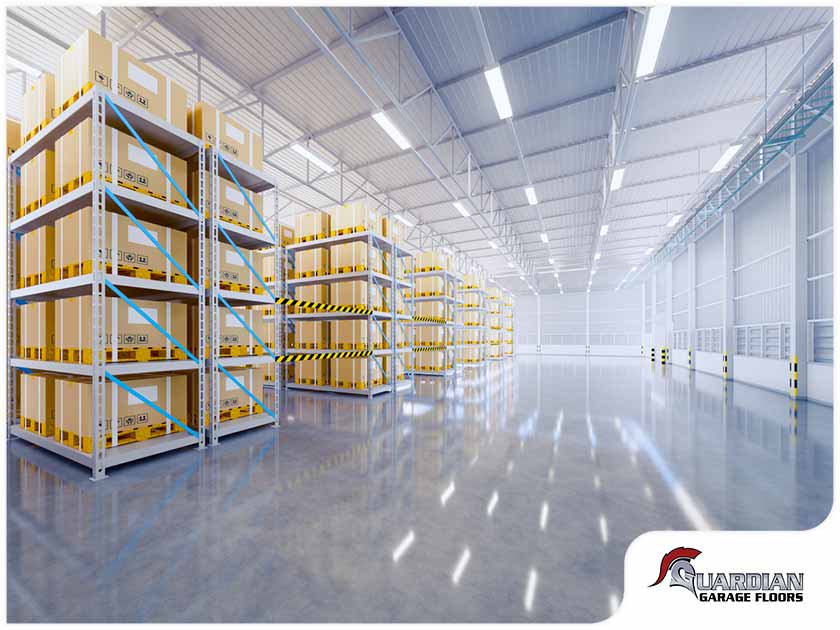
Under those conditions, bare concrete can’t hold up gracefully for long. Without the right protection, surfaces begin cracking, staining, chipping, and wearing down much faster than expected. Dust buildup increases, moisture seeps into the slab, traffic paths become rough and uneven over time.
That is why industrial floor coatings matter far beyond appearance alone.
Polyaspartic Polyurea Coatings Deliver the Most Versatility
Polyaspartic polyurea floor coatings have become one of the strongest options for modern industrial facilities because they perform exceptionally well across multiple environments instead of excelling in only one niche application.
Warehouses, laboratories, manufacturing facilities, food production plants, healthcare environments, and commercial kitchens all place different demands on flooring systems. Some require abrasion resistance while others prioritize chemical protection, moisture resistance, sanitation, or impact durability.
Polyaspartic polyurea systems handle all of those conditions remarkably well.
Their flexibility helps the coating perform under heavy traffic, vibration, impacts, and temperature fluctuations without becoming brittle over time. At the same time, the surface resists:
- Chemical spills
- Moisture intrusion
- Surface abrasion
- Tire marks
- UV exposure
- Heavy rolling traffic
That broad performance range allows these coatings to work exceptionally well in demanding industrial spaces where multiple forms of stress happen simultaneously.
Another major advantage involves installation speed. Many polyaspartic polyurea systems allow one-day installation, helping businesses reduce downtime and return operations to normal much faster than some traditional flooring systems.
Epoxy Flooring Still Appears in Many Facilities
Epoxy flooring remains widely recognized because it has been used in commercial and industrial environments for decades.
The glossy finish improves the appearance of plain concrete while adding moderate protection against stains, abrasion, and surface wear. In lighter-duty environments, epoxy flooring can still perform reasonably well.
The challenge appears in more demanding facilities.
Traditional epoxy coatings may become brittle over time, particularly in areas exposed to impacts, equipment movement, temperature fluctuations, or heavy traffic. Some systems also require extended cure times before the floor can return to service.
UV exposure creates another issue. Certain epoxy coatings gradually yellow or fade in areas exposed to sunlight.
For facilities with lower traffic demands, epoxy may still function adequately. Many industrial properties, though, now move toward more advanced systems with stronger flexibility and durability.
Urethane Cement Systems Perform Well in Wet Environments
Urethane cement flooring commonly appears in breweries, food production facilities, commercial kitchens, and manufacturing environments exposed to moisture and thermal shock.
These systems tolerate hot-water washdowns and steam cleaning far better than many traditional coatings. Facilities dealing with extreme temperature swings often appreciate the stability urethane systems provide under those conditions.
Urethane flooring also offers strong chemical resistance and solid durability under heavy use.
The tradeoff usually comes down to appearance and installation complexity. Many urethane cement systems lean toward a rougher industrial finish rather than a polished commercial appearance.
For highly specialized industrial environments, though, urethane flooring may still provide strong performance advantages.
Acrylic Coatings Work Best in Light Commercial Settings
Acrylic floor coatings are generally chosen for cosmetic improvements rather than industrial durability.
These systems can refresh concrete surfaces quickly while adding temporary surface protection in lower-traffic environments. Retail walkways, decorative concrete areas, and light commercial spaces sometimes use acrylic coatings because of their faster application process.
Industrial environments are a different story.
Heavy equipment, rolling traffic, chemical exposure, and repeated abrasion usually wear acrylic systems down far faster than high-performance industrial coatings.
For warehouses, laboratories, manufacturing plants, and commercial kitchens, acrylic coatings rarely deliver the long-term durability needed for demanding daily operations.
Seamless Flooring Makes Maintenance Easier
Maintenance becomes a major factor in industrial facilities over time.
Cracks, grout lines, porous surfaces, and damaged concrete collect dirt, moisture, chemicals, and debris constantly. Cleaning becomes more difficult as the floor continues wearing down.
Seamless commercial floor coating systems simplify much of that process.
Polyaspartic polyurea flooring systems create smooth sealed surfaces that resist moisture intrusion, staining, dust buildup, and chemical penetration. Instead of absorbing contaminants into the slab itself, the coating keeps them closer to the surface for easier cleaning.
That advantage becomes especially valuable in laboratories, healthcare facilities, food production spaces, warehouses, and manufacturing environments where cleanliness directly affects daily operations.
FAQs
Polyaspartic polyurea floor coatings are widely known for strong durability, flexibility, chemical resistance, UV stability, and long-term industrial performance.
Yes. Epoxy flooring still appears in some industrial environments, although many facilities now prefer polyaspartic polyurea systems for improved durability and faster installation.
Seamless flooring helps reduce dirt buildup, moisture intrusion, staining, and sanitation concerns while simplifying maintenance over time.
Upgrade Your Industrial Floors with Guardian Garage Floors
At Guardian Garage Floors, we install proprietary polyaspartic polyurea coating systems for industrial and commercial facilities across Nashville, Atlanta, Chattanooga, Dallas, Phoenix, Tucson, Raleigh, Tampa, Huntsville, and surrounding service areas.
Engineered to be up to 20 times stronger than traditional epoxy and five times more flexible, our flooring systems are designed to handle heavy traffic, chemical exposure, moisture, abrasion, UV exposure, and demanding industrial conditions.
From warehouses and manufacturing facilities to laboratories, healthcare environments, food production plants, restaurants, and commercial kitchens, our professionally installed seamless coatings deliver long-term durability with one-day installation and easier maintenance for high-performance industrial spaces.
Request a free quote today.