Choosing The Best Epoxy Kitchen Floor Coating For Restaurants In Wake Forest, NC
Quick Summary
Commercial kitchen floor coating in Wake Forest, NC restaurants needs to withstand grease, heat, constant moisture, and heavy foot traffic while meeting health code standards for a seamless, easy-to-clean surface. Standard epoxy handles some of these demands but requires several days to cure and can crack or chip under rolling equipment, while polyaspartic polyurea installs in a single day and resists heat, grease, and impact better over the life of the floor.
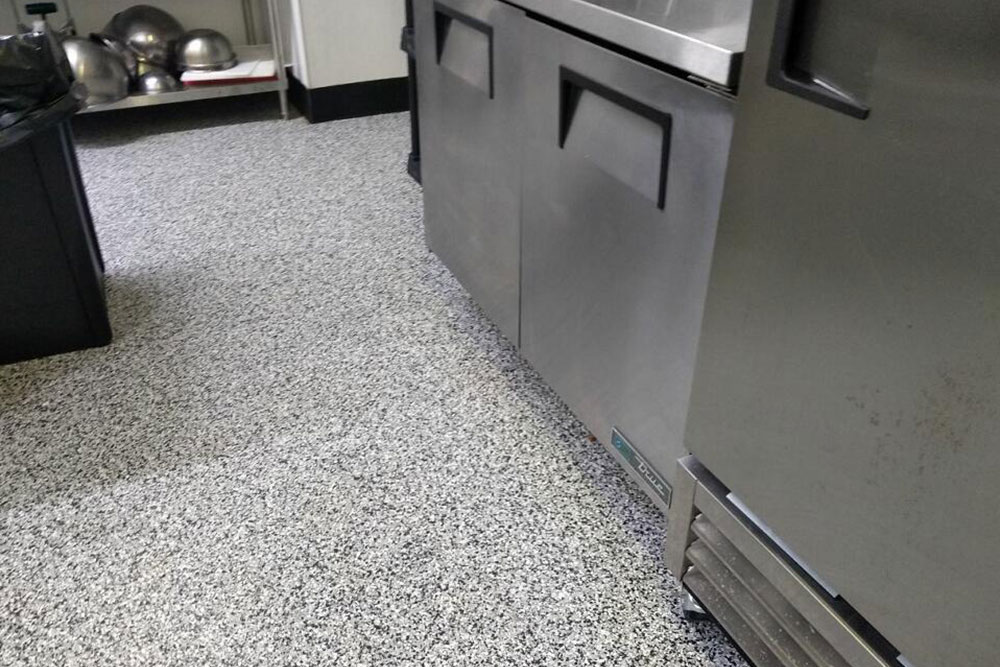
Choosing the right commercial kitchen floor coating carries more weight than almost any other flooring decision a restaurant owner makes, since a kitchen floor deals with grease, heat, and heavy foot traffic every single service shift, seven days a week in most cases.
Wake Forest’s restaurant scene has grown fast alongside the town’s population boom, and health inspectors expect a seamless, easy-to-sanitize surface in every kitchen they walk into during a routine visit. A commercial kitchen floor coating built to handle that daily pressure is worth understanding before signing off on the first bid that comes in from a contractor.
What a Restaurant Kitchen Floor in Wake Forest Needs to Handle
North Carolina’s food code calls for a seamless, non-absorbent surface that can be cleaned and sanitized without hiding grease or bacteria in grout lines or seams. A working kitchen floor deals with hot oil splashes, dropped pans, constant foot traffic from a full staff moving fast during a dinner rush, and daily mopping with harsh degreasing chemicals that break down weaker coatings over time.
Rolling equipment like prep carts, mixer stands, and delivery dollies add impact wear to specific traffic lanes near the walk-in cooler and the loading dock area, and those same paths tend to show wear first on a floor that isn’t built to handle repeated point loads.
On top of the physical demands, a kitchen floor has to stay slip resistant even when it’s wet. A slick surface near a fryer station or dish pit creates a real safety risk for staff during a busy shift, and a single slip-and-fall incident can turn into a costly claim for a restaurant owner. Fast growth around Wake Forest also means more competition for good staff, and a kitchen that feels unsafe underfoot makes retention that much harder in a tight labor market.
Why Epoxy Is the Default Choice for Many Kitchen Floors
Epoxy shows up in most restaurant kitchens across the Triangle for practical reasons. It’s affordable, widely available, and applies as a seamless surface that satisfies health code requirements when installed correctly by an experienced crew familiar with commercial kitchens.
Color options make it easy to meet code requirements around equipment zones and traffic paths, and most contractors and health inspectors are familiar with how it performs day to day over a normal service life. All these make epoxy a comfortable default choice for a new restaurant build-out or a renovation project working within a tight opening timeline.
Where Epoxy Falls Short in a Busy Restaurant Kitchen
The tradeoffs show up once a kitchen opens for business and the floor sees daily use under real conditions. Epoxy typically needs several days to cure before it can handle full kitchen traffic, and every one of those days is a day a restaurant can’t operate at full capacity or generate revenue during the buildout or a renovation.
Heat near fryer stations and dish machines can soften or discolor epoxy over time, and the rigid surface tends to crack or chip where rolling carts and heavy kitchen equipment travel the same path day after day during service.
Repairs to a damaged section often leave a visible seam that can trap grease and bacteria if it isn’t sealed as well as the original installation work. It creates exactly the kind of sanitation gap health inspectors flag during a routine visit and can turn into a costly correction notice.
Why Polyaspartic Polyurea Is the Better Kitchen Floor Coating
A proprietary polyaspartic polyurea coating addresses the specific weak points epoxy runs into inside a working kitchen. Installation finishes in a single day, letting a restaurant reopen for full service far sooner than a multi-day epoxy cure allows during a renovation or new build-out.
The material stays flexible under repeated impact from rolling equipment, resisting the cracking and chipping that epoxy runs into near high-traffic prep and dish areas over months of daily use. It holds up to heat exposure near cooking equipment without softening or discoloring, and a slip-resistant texture option adds traction in wet zones near the dish pit or walk-in cooler where staff move quickly during a rush.
The seamless finish meets the same sanitation standard health inspectors look for, and Guardian backs the finished floor with a transferable lifetime warranty instead of a coating that needs frequent patchwork repairs to stay code compliant.
Let Guardian Garage Floors Coat Your Wake Forest Restaurant
We work with restaurant owners across Wake Forest and the greater Raleigh area, and minimizing closed days is always part of the conversation before a project gets scheduled on the calendar. Our full-time, trained installers handle every kitchen themselves, no subcontractors.
A free flooring estimate starts with an on-site visit to assess the space and outline a timeline that works around your service hours instead of forcing a closure that costs revenue. Ready for a kitchen floor that holds up to a full dinner rush without falling apart? Request a quote today.
FAQs
How long does a restaurant need to close for kitchen floor coating installation?
Most kitchens finish in a single day, with the floor ready for full service the next day, compared to the several days standard epoxy typically needs before handling normal kitchen traffic and rolling equipment again.
Is polyaspartic polyurea safe for food service areas?
Yes. The coating creates a seamless, non-absorbent surface that meets the same sanitation standards health inspectors expect from a properly installed kitchen floor, with no seams or grout lines to trap grease or bacteria.
Can the coating handle constant exposure to grease and hot oil?
Yes. The material resists staining and heat better than standard epoxy, holding up to daily splashes near fryers and cooking equipment without softening, discoloring, or breaking down the way weaker coatings do over a few years of service.