Coating Applications All About Concrete Moisture Testing
Quick Summary
Concrete moisture testing plays a major role in the success of garage floor coatings and commercial floor coating systems. Excess moisture trapped inside a slab can lead to bubbling, peeling, discoloration, and coating failure over time. Proper testing helps identify moisture-related risks before polyaspartic polyurea or other flooring systems are installed, protecting both the surface and long-term performance of the coating.
Concrete looks solid and dry on the surface, but appearances can be misleading. Beneath that slab sits moisture moving slowly through tiny pores and capillaries inside the concrete itself. In some cases, the floor may seem perfectly ready for coating while hidden moisture quietly creates problems underneath.
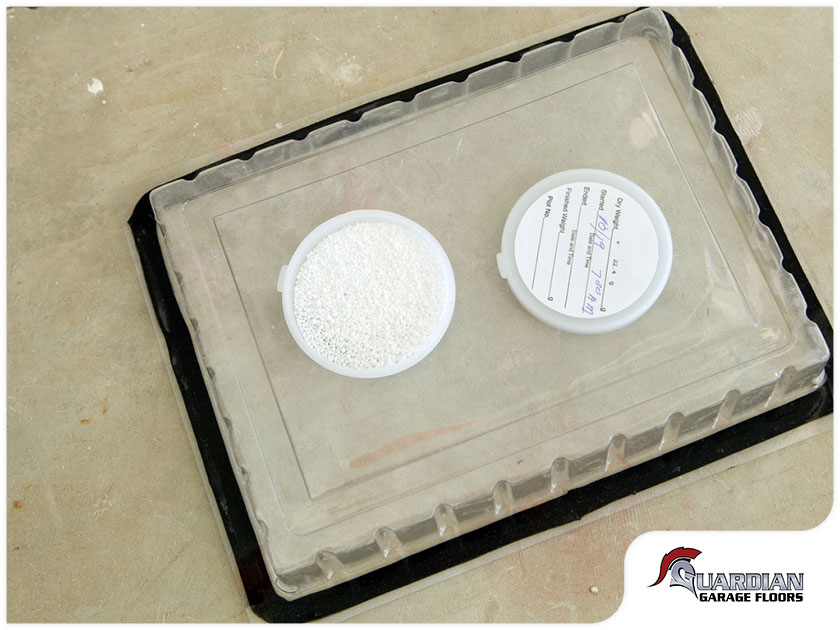
That hidden moisture is one of the biggest reasons floor coating failures happen.
Peeling, bubbling, discoloration, and loss of adhesion often trace back to moisture issues that were never properly addressed before installation. For garages, warehouses, restaurants, laboratories, healthcare facilities, and industrial spaces, those failures can become expensive and frustrating very quickly.
That is why concrete moisture testing matters so much before applying any high-performance concrete floor coating system.
Why Concrete Holds Moisture for So Long
Concrete does not dry the same way many people assume it does.
Even after a slab hardens, moisture remains trapped deep within the concrete structure. Over time, that moisture slowly rises toward the surface through vapor movement inside the slab.
Environmental conditions also affect the process. Humidity, temperature, groundwater conditions, cleaning routines, and weather exposure all influence how much moisture remains inside the concrete.
Some slabs continue releasing moisture for surprisingly long periods after installation.
That becomes a major concern during floor coating applications because excessive moisture can interfere with how the coating bonds to the concrete surface itself.
What Happens When Moisture Problems Get Ignored
Floor coatings rely heavily on strong adhesion to the concrete underneath. If moisture pushes upward through the slab after installation, it can weaken that bond over time.
The result often appears as:
- Bubbling
- Peeling
- Blistering
- Delamination
- Discoloration
- Surface separation
In severe cases, entire sections of coating may detach from the concrete altogether.
These problems are not always immediate either. Some floors look perfectly fine for months before moisture pressure gradually begins affecting the coating system from below.
That delayed failure makes moisture testing one of the most important preparation steps before installing garage floor coatings or commercial floor coating systems.
Moisture Testing Helps Prevent Expensive Failures
Concrete moisture testing provides valuable information about the condition of the slab before installation begins.
Instead of guessing how much moisture remains inside the concrete, professional testing helps identify potential risks early in the process. That allows installers to make informed decisions about surface preparation, coating selection, and timing.
Different testing methods may evaluate:
- Relative humidity inside the slab
- Surface moisture levels
- Moisture vapor emission rates
- Environmental conditions affecting the concrete
The goal is understanding how the slab behaves before sealing it beneath a durable concrete coating system.
Skipping this step may lead to major repair costs later if coating failure develops after installation.
Some Environments Face Higher Moisture Risks
Certain environments naturally create more moisture-related challenges than others.
Garages often experience humidity changes, water intrusion, and vehicle-related moisture. Warehouses may deal with slab-on-grade construction where groundwater conditions affect the concrete over time. Restaurants and commercial kitchens regularly expose floors to cleaning routines, steam, and moisture buildup.
Basements and industrial facilities also commonly face moisture concerns because of below-grade conditions and environmental exposure.
In these settings, moisture testing becomes even more important before applying polyaspartic polyurea floor coatings or other high-performance systems.
Understanding the condition of the slab first helps reduce the risk of long-term coating issues later.
High-Performance Coatings Still Depend on Proper Preparation
Polyaspartic polyurea coating systems are known for outstanding durability, flexibility, and chemical resistance. They perform exceptionally well in demanding environments ranging from garages and warehouses to laboratories and healthcare facilities.
Still, even advanced coating systems rely heavily on proper surface preparation.
A poorly prepared slab may create problems regardless of how strong the coating itself may be. Moisture testing works alongside other preparation steps like grinding, crack repair, and surface profiling to create a stable foundation for long-term performance.
That preparation process directly affects how well the coating holds up over the years ahead.
FAQs
Moisture testing helps identify hidden moisture inside concrete that could cause bubbling, peeling, or coating failure after installation.
Yes. Excessive moisture pressure beneath the slab can affect adhesion and create long-term coating problems if not addressed properly.
Many commercial and residential concrete slabs benefit from moisture testing, especially in garages, basements, warehouses, kitchens, and industrial environments.
Upgrade Your Concrete Floors with Guardian Garage Floors
At Guardian Garage Floors, we install proprietary polyaspartic polyurea coating systems designed for long-term durability in garages, warehouses, restaurants, laboratories, healthcare facilities, industrial buildings, and commercial spaces alike.
Serving Nashville, Atlanta, Chattanooga, Dallas, Phoenix, Tucson, Raleigh, Tampa, Huntsville, and surrounding service areas, our veteran-owned company focuses heavily on proper surface preparation before installation begins. From moisture evaluation and concrete preparation to professionally installed one-day flooring systems, our in-house crews create seamless surfaces engineered to resist moisture, abrasion, chemical exposure, UV damage, and heavy daily traffic for years to come.
Request a free quote today.