How to Remove Concrete Stains
Quick Summary
Concrete stains can quickly make garages, patios, warehouses, and commercial spaces look neglected. Oil, rust, grease, tire marks, and moisture all penetrate unprotected concrete over time. Cleaning methods vary depending on the stain itself, but long-term protection often comes from sealed flooring systems like polyaspartic polyurea coatings that resist staining and simplify maintenance.
Concrete has a habit of holding onto stains longer than people expect. A small oil leak in the garage becomes a permanent dark spot. Rust from patio furniture leaves orange streaks that refuse to disappear. Tire marks settle into the surface until the floor starts looking worn and neglected no matter how often it gets cleaned.
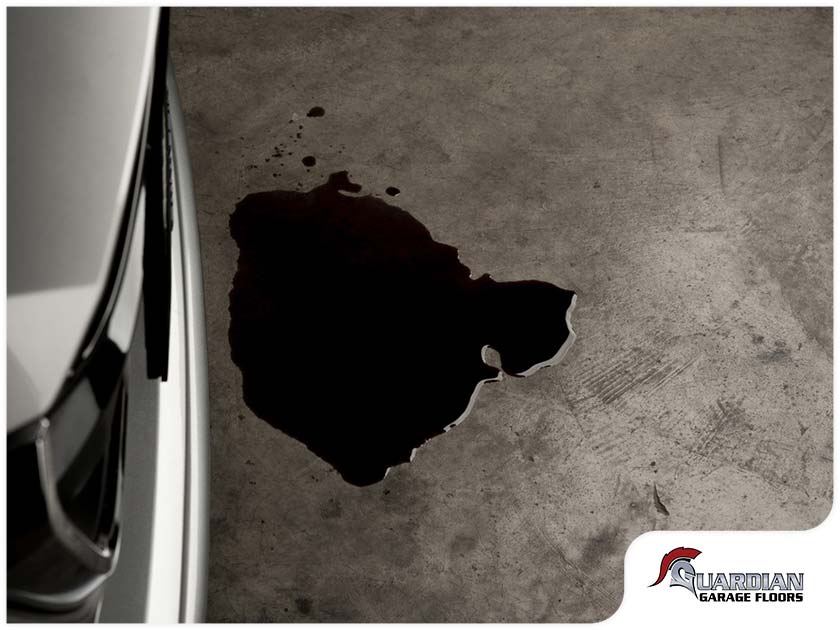
That happens because concrete is naturally porous.
Tiny openings throughout the slab absorb liquids, dirt, chemicals, and debris surprisingly fast. Once contaminants sink below the surface, removing them becomes much harder than wiping down ordinary flooring materials.
Some stains can still be cleaned effectively with the right approach. Others reveal why protective concrete floor coating systems have become so popular for long-term protection.
Oil Stains Usually Sink Deeper Than Expected
Oil is one of the most common concrete stains, especially in garages, warehouses, and industrial spaces.
Fresh oil spills are easier to remove because they have not fully absorbed into the slab yet. The longer the stain sits, the deeper it penetrates into the concrete pores underneath.
Start by absorbing excess oil using cat litter, baking soda, or another absorbent material. Once the surface residue is removed, a degreasing cleaner and stiff-bristle brush usually work better than basic soap and water alone.
Warm water helps loosen heavier buildup, especially around older stains.
Some deeply embedded oil spots may lighten rather than disappear completely because the oil has already worked its way into the slab itself. That lingering discoloration is common on untreated concrete floors.
Rust Stains Need a Different Approach
Rust stains stand out immediately because of their bright orange or reddish appearance.
Patio furniture, tools, shelving, appliances, and metal equipment often leave rust marks behind after sitting on concrete for long periods. Moisture exposure speeds up the process significantly.
Unlike grease stains, rust responds better to acidic cleaners designed specifically for mineral buildup and oxidation. Gentle scrubbing combined with the right rust-removal product often improves the appearance dramatically.
Harsh wire brushes should generally be avoided because they may damage the concrete surface itself or leave behind additional metal particles that worsen staining later.
Outdoor concrete surfaces often develop rust stains more quickly because of constant moisture exposure from rain, humidity, and irrigation systems.
Tire Marks Build Up Slowly Over Time
Garage floors collect tire marks gradually. Many homeowners do not notice them at first because the buildup happens over months or years.
Heat from vehicle tires softens road residue and rubber compounds, allowing them to transfer onto the concrete surface repeatedly. Over time, those dark streaks become increasingly difficult to remove.
Pressure washing alone usually does not solve the problem completely.
A concrete-safe degreaser combined with steady scrubbing typically works better for breaking down tire residue. In heavily used garages, though, staining often returns quickly because the concrete remains exposed and porous.
That cycle explains why many homeowners eventually move toward garage floor coating systems designed to resist tire staining altogether.
Moisture Stains Can Signal Bigger Problems
Some concrete stains point toward deeper issues below the surface.
Dark moisture spots, white mineral deposits, or mildew growth may indicate recurring water intrusion into the slab. Basements, garages, patios, warehouses, and commercial kitchens commonly experience these problems over time.
Efflorescence is one example. This chalky white residue forms when moisture moves through concrete and leaves mineral deposits behind after evaporation.
Cleaning the surface helps temporarily, but the staining often returns unless the underlying moisture issue is addressed.
Sealed flooring systems help reduce moisture penetration significantly by creating a protective barrier over the concrete itself.
Why Some Concrete Floors Stain So Easily
The condition of the concrete plays a major role in how badly staining develops.
Older slabs often become more porous with age and wear. Small cracks, surface abrasion, and unfinished concrete all allow contaminants to penetrate more easily.
High-traffic environments make the problem even worse.
Garages deal with road salt, oil, and tire residue. Restaurants face grease and spills. Warehouses collect dirt, chemicals, and rolling equipment debris throughout the day.
Without surface protection, concrete continuously absorbs whatever lands on it.
That is one reason polyaspartic polyurea floor coating systems have become increasingly popular in both residential and commercial environments. These seamless coatings create a durable barrier that resists staining, moisture intrusion, abrasion, and chemical exposure far better than unfinished concrete alone.
Prevention Often Beats Deep Cleaning
Deep-cleaning concrete stains can become frustrating quickly, especially when discoloration has already penetrated the slab.
Protective floor coating systems help reduce many of those problems before they start.
Polyaspartic polyurea coatings create a sealed surface that keeps contaminants near the top layer instead of allowing them to absorb deep into the concrete. Oil, grease, tire marks, and spills become much easier to clean because the surface resists penetration from the start.
For garages, warehouses, restaurants, laboratories, and commercial facilities, prevention often saves far more time and maintenance over the long term than repeated stain removal efforts.
FAQs
Some older stains can be greatly improved, but deeply absorbed discoloration may remain partially visible in untreated concrete.
Concrete is naturally porous, which allows liquids, dirt, oil, and chemicals to penetrate beneath the surface over time.
Yes. Polyaspartic polyurea floor coatings create a sealed surface that resists oil, grease, moisture, tire marks, and chemical staining.
Protect Your Concrete Floors with Guardian Garage Floors
At Guardian Garage Floors, we install proprietary polyaspartic polyurea coating systems designed to protect concrete surfaces from staining, moisture, abrasion, chemical exposure, and long-term wear. Serving homeowners and businesses across Nashville, Atlanta, Chattanooga, Dallas, Phoenix, Tucson, Raleigh, Tampa, Huntsville, and surrounding service areas, our veteran-owned company delivers seamless flooring systems built for real-world performance.
Engineered to be up to 20 times stronger than traditional epoxy and five times more flexible, our coatings create durable, easy-to-clean surfaces for garages, patios, warehouses, restaurants, laboratories, healthcare facilities, and industrial spaces alike.
Request a free estimate today.