Polyurea Coatings Last Longer Than Epoxy: Here’s The Comparison
Quick Summary
Epoxy floors typically last between two and five years in a residential garage before chipping, yellowing, or peeling sets in, and even less under heavy commercial traffic. Polyaspartic polyurea bonds directly into the concrete rather than sitting on top of it, which removes the main failure point that shortens epoxy’s lifespan, allowing it to last for the life of the slab and carry a transferable lifetime warranty.
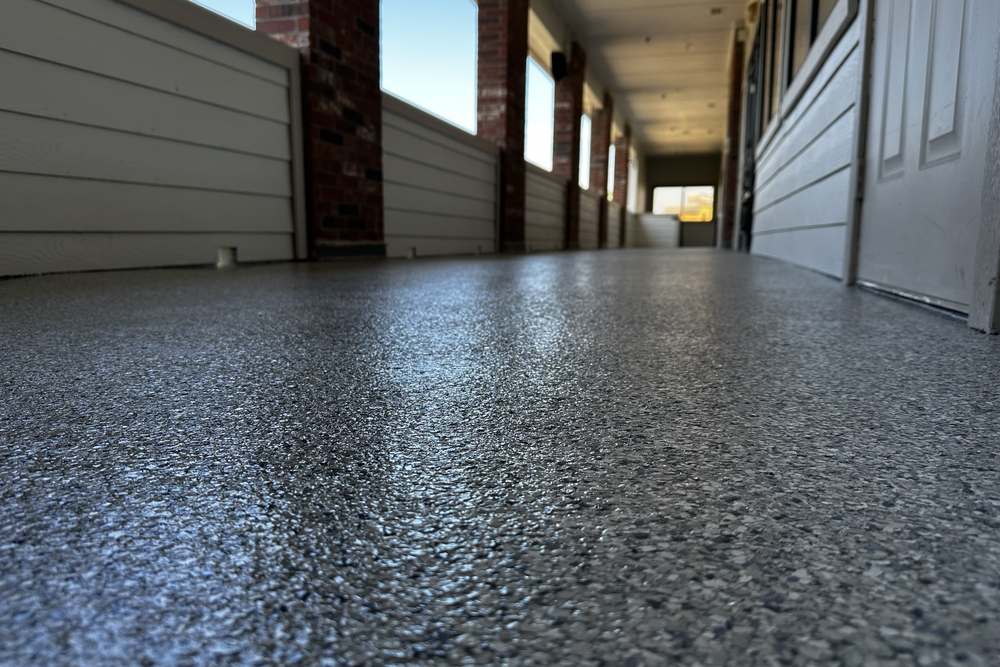
How long does an epoxy floor last? It’s one of the most common questions people ask before a flooring project even gets scheduled, and the honest answer varies more than most expect. A residential garage floor might hold up for several years under light use, while the same coating in a busy commercial space can start failing within a single year.
Comparing that lifespan against polyaspartic polyurea floor coating makes it easy to see why more homeowners and businesses are making the switch instead of sticking with a coating that needs frequent redos.
How Long Does an Epoxy Floor Last?
In a typical residential garage with light to moderate use, epoxy commonly holds up for somewhere between two and five years before it starts showing real wear and needing attention. That window shrinks fast in a commercial or industrial setting, where forklift traffic, chemical exposure, and constant foot traffic can wear a coating down within a single year in the busiest areas of a facility.
A handful of factors shift that number in either direction, including how much direct sun the floor gets near garage doors or loading docks, how often the space gets exposed to moisture, and how well the concrete was prepped before the coating went on in the first place.
What Shortens an Epoxy Floor’s Lifespan
A few specific issues account for most early epoxy failures seen in the field. Dropped tools, rolling equipment, and heavy impact chip the rigid surface in high-traffic spots, and those chips tend to spread into larger cracks over time. Sun exposure near an open garage door or an unshaded section causes the coating to yellow and chalk faster than the rest of the floor.
Moisture pushing up from underneath the slab, often from ground water or a poor vapor barrier, causes bubbling and delamination in patches. Harsh cleaning chemicals used without knowing which ones are safe for epoxy can also soften or discolor the surface well before its expected lifespan runs out.
How Long Does Polyurea Last by Comparison?
Polyaspartic polyurea is designed to last for the life of the concrete slab itself rather than needing a recoat on a fixed schedule. That expectation comes backed by a transferable lifetime warranty, a level of coverage standard epoxy products don’t come close to matching.
The material tests out at 20 times stronger than epoxy, which is a big part of why the same daily wear that chips and cracks an epoxy floor barely registers on a polyurea surface. The same issues that shorten an epoxy floor’s lifespan, chipping, UV exposure, trapped moisture, and chemical sensitivity, show up far less often with polyurea because of how the material is built and applied to the concrete underneath it.
Why the Bonding Method Makes the Biggest Difference
The core reason for the longevity gap comes down to how each material attaches to concrete. Epoxy forms a separate rigid layer on top of the slab, and that bond line between the coating and the concrete becomes a weak point over time as moisture, temperature changes, and impact work against it. Polyurea takes a different approach entirely, absorbing into the surface of the concrete itself rather than resting on top of it.
That bond also comes with roughly 5 times the flexibility of epoxy, letting the coating remain stable through installation temperatures ranging from -30°F to 130°F and the seasonal swings that follow long after the crew leaves. Without a separate layer to peel, bubble, or chip away, the coating and the slab move and wear together instead of fighting each other, which is the main reason polyurea holds up so much longer under the same conditions that wear down epoxy.
Let Guardian Garage Floors Install a Floor Built to Last
We install polyaspartic polyurea specifically because it outlasts epoxy by such a wide margin, and we back that up with a transferable lifetime warranty, good for 15 years in a new owner’s hands, instead of a coating that needs recoating every few years to stay presentable. Our full-time, trained installers handle every project themselves, no subcontractors, so the bond between the coating and your concrete gets done right the first time around.
Ready for a floor that’s still holding up a decade from now instead of needing a redo? Request your free estimate today.
Frequently Asked Questions
Can an epoxy floor be recoated to extend its life?
Yes, but recoating means grinding down the old surface and reapplying a new layer, which adds cost and downtime on a schedule that repeats every few years depending on how the floor gets used.
Does polyurea really last for the life of the concrete?
Under normal use, yes. The coating bonds into the slab itself and resists the wear patterns that typically shorten epoxy’s lifespan, which is why it carries a transferable lifetime warranty.
What could shorten a polyurea coating's lifespan?
Extreme, sustained abuse like dragging heavy metal objects across the surface repeatedly can cause wear over time, but normal residential or commercial use falls well within what the coating is built to handle.