Top 7 Reasons To Apply Polyurea Coating For Garage Floor
Quick Summary
Polyurea coating for garage floor applications resists oil, chemical, and road salt stains while handling vehicle weight and heavy equipment without denting or cracking under regular use. The material stays flexible through temperature swings in an unheated garage, installs in a single day, and adds slip resistance underfoot, giving homeowners a floor that holds up to daily use without the constant upkeep bare or painted concrete requires year after year.
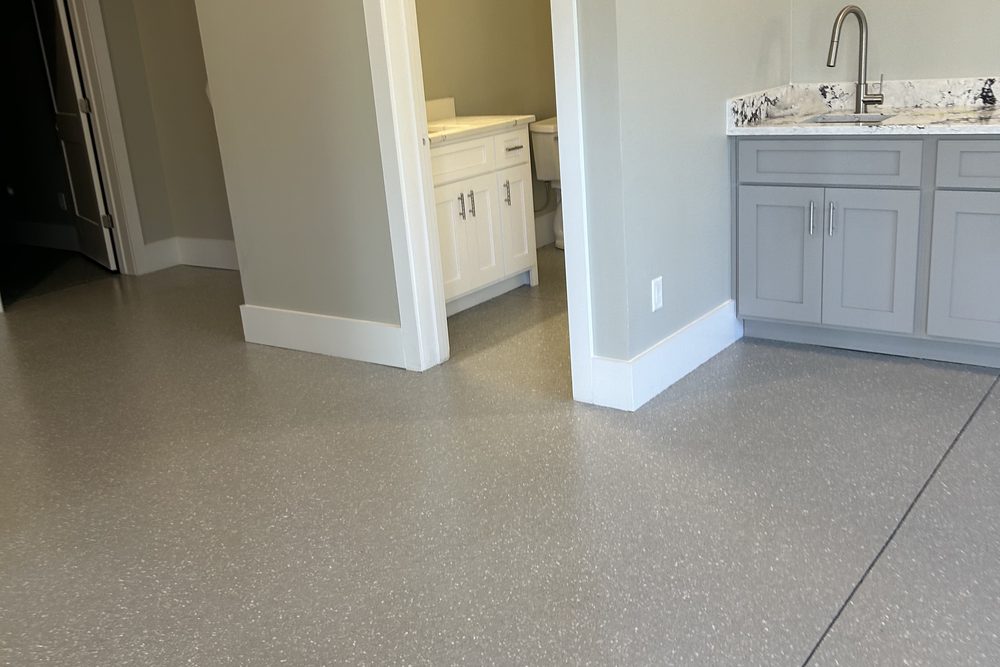
A polyurea coating for garage floor surfaces solves problems that bare concrete, paint, and standard epoxy all struggle with in the same space year after year. A garage deals with parked vehicles, dropped tools, oil drips, and temperature swings that most other rooms in a house never see, and the right coating needs to hold up to all of it at once without constant repair or upkeep.
Here’s a closer look at what makes polyurea truly worth the investment for this specific space in a home.
Handles Vehicle Weight and Heavy Equipment Without Damage
Parked cars, rolling tool chests, and heavy workbenches put constant pressure on specific spots of a garage floor, and that pressure adds up over years of repeated use in the same location day after day.
Polyaspartic polyurea tests out at 20 times stronger than epoxy, giving it enough resilience to handle that kind of weight without denting, chipping, or cracking the way weaker coatings eventually do under the same conditions and repeated point loads.
Resists Oil, Chemical, and Road Salt Stains
A garage floor deals with a constant stream of potential stains, from oil drips and brake fluid to road salt tracked in on tires during the winter months when driveways and roads get treated ahead of storms.
Polyurea’s non-porous surface resists all of these without soaking in the way bare or painted concrete does, so spills wipe away with a rag instead of leaving a permanent mark behind after just one bad afternoon of working on a car or mower.
Installs in a Single Day with Minimal Disruption
A garage often doubles as a storage space, workshop, or parking spot that a family can’t easily go without for long stretches of time during a home renovation or upgrade project.
Most polyurea installations wrap up in a single day, with the floor ready to walk on within hours and open to full vehicle traffic the next day, compared to the multi-day cure window other coatings typically require before normal use resumes across the whole space and life gets back to normal.
Stays Flexible Through Temperature Swings in an Unheated Garage
Garages are often the least insulated space in a house, swinging from freezing cold in winter to intense heat in summer with no climate control to soften the extremes on either end of the thermometer.
Polyurea is built roughly 5 times more flexible than epoxy and stays stable across a temperature range from -30°F to 130°F, handling those swings without cracking the way a rigid coating would after a few seasons of exposure to the same extremes.
Adds Slip Resistance for a Safer Work and Storage Space
Wet shoes, melting snow, and spilled liquids all make a smooth garage floor slippery at exactly the moments it needs to be safest, like when carrying a ladder or a stack of heavy boxes across the room during a busy weekend project.
An aggregate texture broadcast into the coating adds grip underfoot without sacrificing the finished, polished look of the floor once everything cures and the crew clears out.
Comes Backed by a Lasting Warranty Instead of Recurring Maintenance
Bare concrete needs regular sealing, painted floors need repainting every few years as the finish wears thin, and epoxy often needs a recoat as it wears down under daily traffic near the garage door and workbench areas.
A polyurea coating comes with a warranty built to last for the full life of the floor, removing the recurring maintenance cycle that comes with weaker alternatives and the repeat cost that goes along with each one of those projects.
Keeps Concrete Dust from Spreading Through the Garage
Bare concrete slowly breaks down at the surface over time, releasing fine dust into the air that settles on parked cars, stored items, and anything else nearby in the space week after week. Painted floors help for a while, but the paint wears thin in high-traffic spots and the dust problem creeps back in within a year or two of regular use.
Polyurea seals the surface completely from day one, stopping that dust at the source so a garage stays cleaner between sweepings and stored items don’t collect a fine layer of grit over the seasons.
Let Guardian Garage Floors Coat Your Garage the Right Way
We install polyaspartic polyurea because it holds up to exactly what a garage floor deals with every single day, from parked vehicles to dropped tools and everything in between that a busy household throws at it.
Our full-time, trained installers handle every project themselves, no subcontractors, and back the finished floor with a transferable lifetime warranty that carries over to a new owner for 15 years if the home ever sells. Ready for a garage floor that finally keeps up with how your household uses the space day to day? Request your free estimate today.
Frequently Asked Questions
How long does it take to coat a two-car garage floor?
Most two-car garages finish in a single day, from grinding through the final seal coat, with the floor ready to walk on within a few hours and open to vehicle traffic the very next day.
Will polyurea crack if I drop something heavy on it?
The flexible material resists cracking far better than rigid coatings like epoxy, though extreme, sustained abuse like dragging heavy metal repeatedly across the same spot day after day can still cause wear over time on any flooring surface, coated or not.
Can polyurea be applied over an existing painted or stained garage floor?
In most cases, yes, once the old paint or stain gets ground off down to bare concrete, since polyurea bonds directly into the slab rather than sitting on top of another coating that could fail underneath it.