How To Choose The Right Concrete Pool Deck Coating
Quick Summary
Choosing the right concrete pool deck coating starts with slip resistance, since a pool deck stays wet more often than almost any other outdoor surface around a home throughout the entire swimming season. Heat retention, chlorine exposure, UV stability, and how the coating bonds to the concrete all shape how well a pool deck performs over time, with texture and color choices playing a smaller role in overall durability than most homeowners initially expect going into the project.
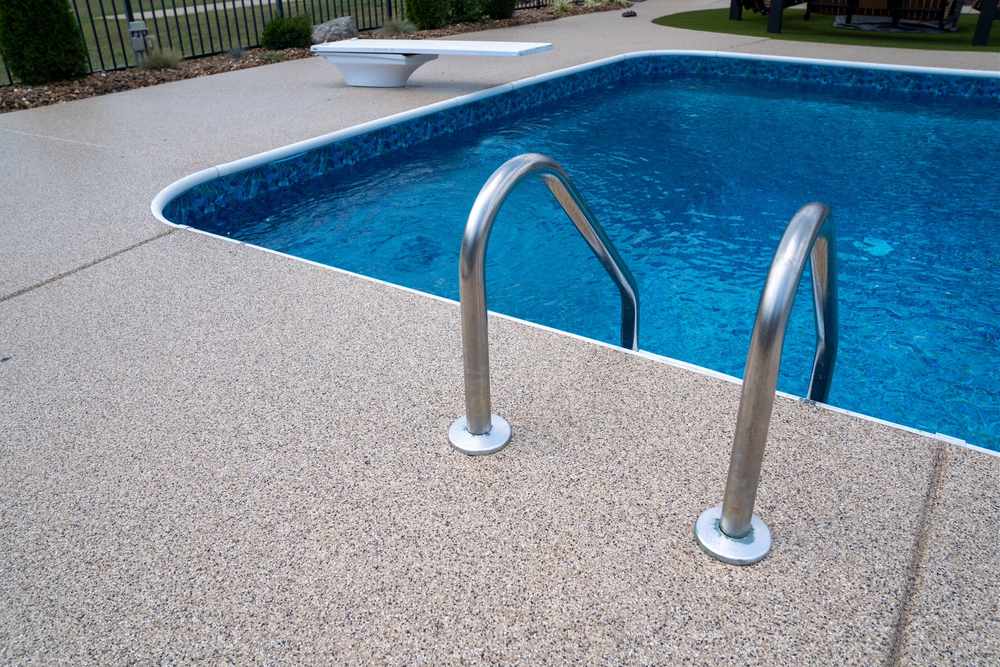
Choosing the right concrete pool deck coating involves a different set of priorities than picking a coating for a garage or driveway elsewhere on the property. A pool deck deals with constant water exposure, bare feet, direct sun for hours at a stretch, and pool chemicals that never touch a typical concrete surface anywhere else on a property.
These factors shape what makes a good choice here more than color or pattern ever will, even though those details tend to get the most attention early in the process.
Start with Slip Resistance, Not Looks
Pool decks stay wet constantly from splashes, dripping swimmers, and the occasional rain shower, and a smooth or glossy finish that looks great in photos can turn dangerous the moment it gets wet underfoot. Look for a coating with a textured, aggregate-based finish that maintains grip even when soaked, especially in high-traffic zones right at the pool’s edge and near the ladder or steps where bare feet move quickly and water pools up between trips in and out.
A finish that’s too rough can scrape bare feet over a long pool day, so the right texture balances safety against comfort rather than maximizing grip alone.
Consider How Hot the Surface Gets Underfoot
Dark colors absorb more heat from direct sun, and a pool deck sitting in full sun can get uncomfortably hot for bare feet by midafternoon on a summer day, especially in climates with long, intense stretches of heat.
Lighter colors and certain aggregate textures reflect more heat than a solid dark coating, so color choice affects comfort as much as appearance for anyone walking barefoot from the pool to a lounge chair or the grill on the far side of the deck.
Check How the Coating Handles Chlorine and Pool Chemicals
Splashed pool water carries chlorine and other chemicals onto the surrounding deck on a regular basis, and not every coating resists that kind of repeated chemical exposure well over time and repeated seasons of pool use.
A coating that isn’t chemically resistant can discolor, degrade, or lose its finish faster near the areas closest to the water, leaving a visible ring or patch around the pool’s perimeter that stands out against the rest of the deck.
Think About Sun Exposure and Fading Over Time
Pool decks sit in full sun for an entire season with little to no shade in most backyards, unlike a shaded patio or a covered porch elsewhere on the property that sees far less direct exposure.
A coating that isn’t UV stable will yellow or fade unevenly within a season or two, especially compared to any shadier sections of the same deck that see less direct light throughout the day, leaving a mismatched, patchy appearance across the whole surface.
Factor In Installation Time Around Pool Season
Nobody wants to close off a pool deck for multiple days during the peak of summer when the family most wants to use it after months of waiting for warm weather.
Concrete coating installation speed counts here more than almost any other project around the house, since most homeowners want to get back to using the pool within the same week the deck gets redone rather than losing an entire vacation stretch to a slow cure time that keeps everyone off the deck.
Ask How the Coating Bonds to the Concrete
Pool decks deal with near-constant moisture right at the surface, plus groundwater pressure from below in many yards depending on the soil and grading around the pool itself.
A coating that sits on top of the concrete as a separate layer is more likely to trap that moisture and fail over time than one that bonds directly into the slab, which counts for even more here than it does on a driveway or garage floor that sees far less water exposure across the season.
Match the Coating to How the Deck Gets Used
A deck built mostly for quiet lounging and sunbathing has different priorities than one that regularly hosts pool parties with kids running, food and drinks nearby, and heavy foot traffic all afternoon. Families with young children often weigh slip resistance and heat management above every other factor, since bare little feet feel both problems more acutely than adults do.
It’s also worth checking if the pool runs on a saltwater system rather than standard chlorine, since saltwater brings its own corrosive properties into the mix and not every coating handles that chemistry the same way chlorine gets handled. Thinking through how the space really gets used before choosing a finish helps avoid picking a coating that looks great on a sample board but doesn’t fit the way a family spends time around the water.
Let Guardian Garage Floors Coat Your Pool Deck
We install polyaspartic polyurea coating on pool decks because it checks every box that counts most for this specific space: slip resistance, chemical resistance, UV stability, and a single-day installation that gets a family back in the water fast without losing a week of summer.
Our full-time, trained installers handle every project themselves with no subcontractors, and we back the finished deck with a transferable lifetime warranty that carries over to a new owner for 15 years if the home ever sells. Ready for a pool deck that stays safe and looks good for years to come? Request your free estimate today.
Frequently Asked Questions
What’s the best texture for a pool deck coating?
An aggregate chip blend broadcast into the base coat adds slip resistance without feeling rough underfoot, striking a balance between safety and comfort for bare feet around the water and near the steps.
Can a pool deck coating handle constant chlorine exposure?
A properly formulated coating resists chlorine and typical pool chemicals without discoloring or breaking down over multiple seasons, though not every product on the market is built for that level of repeated exposure.
How soon can I use my pool deck after a new coating?
Most pool decks are ready to walk on within a few hours of the final coat and fully usable, including furniture and foot traffic, within 24 hours of completion, well before the next pool day.