The Pros And Cons Of Epoxy Coating For Driveways: Why Polyurea Is Better
Quick Summary
Epoxy driveway coating offers a lower upfront cost and a glossy finish, but UV exposure, temperature swings, and ground moisture cause it to yellow, crack, or peel faster outdoors than it does in an indoor setting. Polyaspartic polyurea bonds directly into the concrete, stays flexible through seasonal temperature changes, and resists UV fading better than epoxy, all while curing in a single day instead of several.
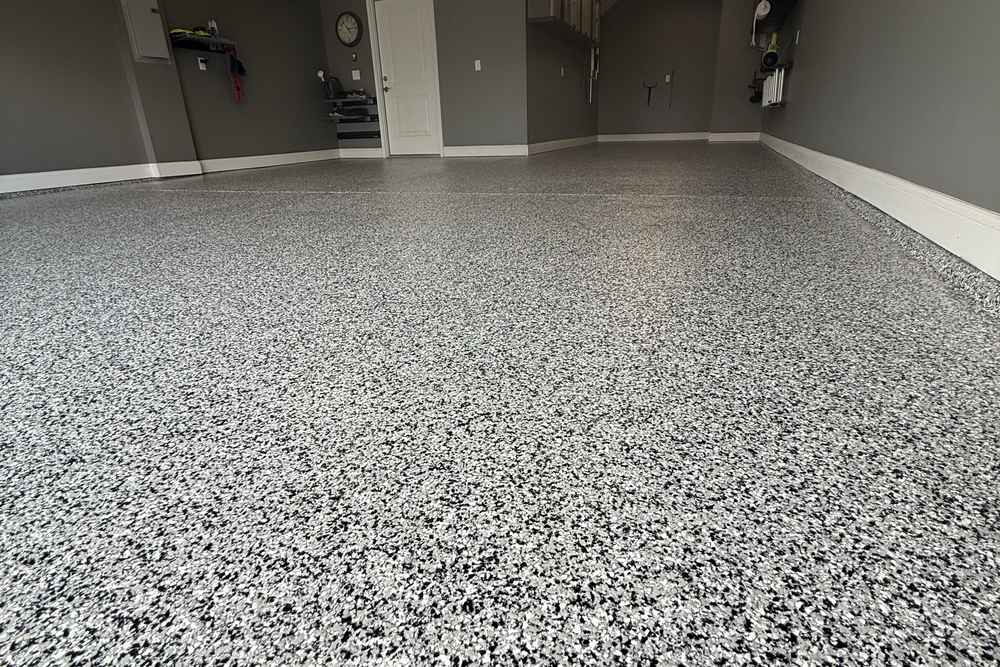
Epoxy driveway coating looks like a natural extension of the same product that works well on garage floors and basements, but a driveway sits in a completely different environment. Full sun exposure, seasonal temperature swings, and constant vehicle weight put epoxy through conditions it wasn’t originally designed to handle as well as an indoor slab.
Weighing the real pros and cons before committing helps avoid a driveway that looks great for a season and then starts showing problems soon after.
The Pros of Epoxy Coating for Driveways
Epoxy has a few genuine advantages that keep it on most shortlists:
Lower upfront cost: epoxy typically costs less than premium coating alternatives, making it an easy entry point for a tight budget.
Wide availability: most concrete coating installers know the product well, and materials are easy to source almost anywhere.
Glossy, uniform finish: freshly applied epoxy gives a driveway a clean, polished look that photographs well and impresses at first glance.
Reasonable chemical resistance: epoxy holds up fine against occasional oil drips and light chemical exposure in a controlled setting.
The Cons of Epoxy Coating for Driveways
The drawbacks tend to surface once the coating spends real time outdoors:
UV sensitivity: direct sun exposure causes epoxy to yellow, chalk, or fade unevenly within a season or two outdoors.
Rigidity: the hard, inflexible surface cracks as the slab beneath it expands and contracts with temperature swings.
Slow cure time: most epoxy installations need several days before a driveway can handle full vehicle weight again.
Moisture sensitivity: trapped moisture pushing up from the ground can cause bubbling or peeling in patches over time.
Why Epoxy Struggles Specifically on Driveways
Epoxy performs reasonably well indoors, where a garage or basement floor stays shielded from direct sun and extreme temperature shifts. A driveway gets none of that protection. It sits under full sun for hours at a stretch, takes on rain and standing water directly, and swings from hot pavement in the afternoon to a cold surface overnight without any buffer in between.
Vehicle weight adds another layer of stress, since tires turning in the same spot near a garage door or mailbox concentrate pressure on a small area repeatedly, day after day. All of these outdoor-specific conditions combine to shorten the lifespan of a coating that was never built with full outdoor exposure as the primary use case in mind from the start.
Why Polyurea Comes Out Ahead for Driveways
A proprietary polyaspartic polyurea coating addresses each of the weak points epoxy runs into outdoors. The material bonds into the surface of the concrete itself rather than sitting on top of it, which removes the trapped-moisture problem that leads to bubbling and peeling.
It stays flexible enough to move with the slab through temperature swings, resisting the cracking that catches up with rigid epoxy after a year or two of seasonal change. The coating also stays 100% UV stable, holding its color through direct summer sun instead of yellowing or chalking.
Installation wraps up in a single day, with the driveway ready to walk on within hours and open to vehicle traffic the next day, backed by a transferable lifetime warranty instead of a coating that needs frequent touch-ups.
Let Guardian Garage Floors Coat Your Driveway the Right Way
We hear from plenty of homeowners who tried epoxy on a driveway and watched it yellow or crack within a couple of years of regular use. Our polyaspartic polyurea coating is built specifically to handle full outdoor exposure, and our full-time, trained installers back every finished driveway with a transferable lifetime warranty instead of a product that needs constant babying.
Ready for a driveway coating built for the outdoors instead of borrowed from an indoor product line? Request your free estimate today.
Frequently Asked Questions
Can epoxy be used outdoors on a driveway at all?
It can, but direct sun, rain, and temperature swings tend to shorten its lifespan compared to how it performs on a protected indoor floor like a garage or basement.
How is polyurea different from epoxy for a driveway?
Polyurea bonds into the concrete and stays flexible with the slab, while epoxy sits on top as a rigid layer that’s more prone to yellowing in sun and cracking under temperature swings.
How long does a polyurea driveway coating take to install?
Most driveways are ready to walk on within a few hours of the final coat and open to full vehicle traffic within 24 hours, much faster than the multi-day cure epoxy typically needs.