Commercial Kitchen Flooring Requirements In North Carolina
Quick Summary
North Carolina does not publish a single list of approved kitchen floor materials; instead, food establishments are inspected by local health departments under state rules that follow the FDA Food Code model, which asks for floors that are smooth and easy to clean. Facilities under USDA inspection are held to a standard of durable materials impervious to moisture. A continuous polyaspartic polyurea coating installed by trained crews is one way a restaurant or food plant can meet those expectations, and confirming the details with the county health department before installation avoids costly rework.
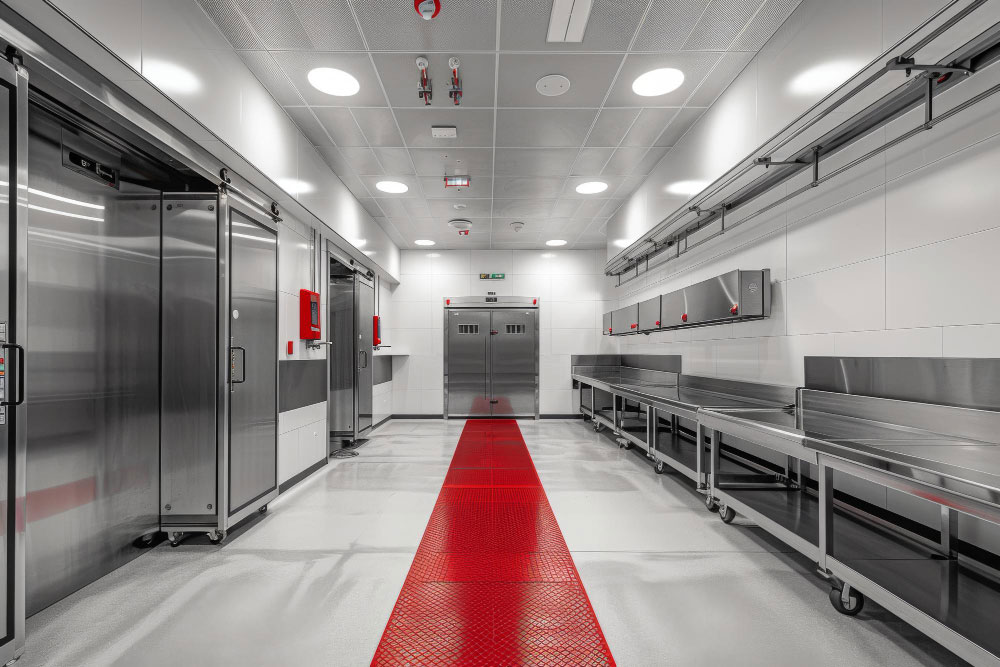
Anyone planning a new restaurant, ghost kitchen, or food production space in the Triangle or the Sandhills tends to ask the same question early on, which is what the commercial kitchen flooring requirements actually say, and the honest answer is that North Carolina regulates the condition and cleanability of the floor much more than it names a particular product.
Our team installs polyaspartic polyurea floor coatings in commercial kitchens across North Carolina, and the sections below walk through who sets the rules, what the published language asks of a floor, where USDA standards apply, and how we coordinate an installation around a health department review.
Who Sets The Kitchen Floor Rules In North Carolina
The FDA publishes the Food Code as a model that states and local agencies adapt into their own rules, and it is not binding on a restaurant until a state or county adopts it, which is why two kitchens in different states can face different wording for the same floor.
In North Carolina, food establishments fall under state sanitation rules found in 15A NCAC 18A .2600, and the day-to-day work of plan review and inspection is carried out by environmental health staff at the county health department. Some local health departments, Johnston County among them, publish an N.C. Food Code Manual that explains how the rules are applied to real kitchens.
Because the local health department is the office that approves plans and walks the finished space, it is the final authority on what your floor must look like, and we always suggest an owner or contractor confirm the details with that office before choosing a surface.
What The Published Language Asks Of A Kitchen Floor
The N.C. Food Code Manual published by Johnston County’s health department follows the FDA structure, with Chapter 6 covering physical facilities and its Part 6-101 addressing materials for construction and repair of indoor areas, while Part 6-201 deals with cleanability, meaning how a floor is designed and installed so that it can be kept clean.
The manual defines the terms in plain language, and two of them matter most for flooring: a smooth surface is one with an even or level surface with no roughness or projections, and an easily cleanable surface allows effective removal of soil by normal cleaning methods.
Put simply, the language is performance-based, so a floor with open pores, cracks, worn patches, or deep texture that traps grease and food debris is the kind of surface an inspector is likely to question, no matter what material it started as.
Details such as how the floor meets the wall, how water reaches a drain, and how the surface is finished around equipment bases are also reviewed during plan review, so those points are worth raising with the health department before a coating date is set.
Where USDA Standards Apply Instead
A typical restaurant is not inspected by the USDA, but meat and poultry plants operating under federal inspection follow the Food Safety and Inspection Service regulations, and 9 CFR 416.2(b)(2) states that walls, floors, and ceilings within these establishments must be built of durable materials impervious to moisture, and that they must be cleaned and sanitized as necessary to prevent adulteration of product. You can read the full text of 9 CFR 416.2 on the Cornell Legal Information Institute site.
The word impervious is the practical difference between the two systems, since a floor in a federally inspected plant has to resist moisture rather than just clean up well, and a continuous, nonporous coating is one way a processor can work toward that standard.
If your facility handles both retail food service and federally inspected product, it makes sense to design the floor to the stricter standard from the start.
How Kitchen Conditions Shape The Floor Choice
Rules describe the target, but a working kitchen decides whether a floor reaches it, because grease, hot wash water, dropped pans, cleaning chemicals, and rolling carts all attack the surface every day, and a floor that passes its first inspection can drift out of compliance over time if it starts to crack, peel, or wear through.
This is the reason many North Carolina kitchen owners move away from bare concrete and tile. Concrete is porous and absorbs oil, while tile depends on grout joints that hold moisture and residue and need constant attention, so a coating that bonds into the slab and leaves a single continuous surface solves several problems at once.
Traction matters as much as cleanability, since wet floors are a common cause of slips in busy kitchens, and the surface texture you choose should grip a wet shoe without becoming so rough that it traps soil, which is a balance that is easier to strike when the texture is built into the coating system.
How Our Polyaspartic Polyurea Coating Fits
Our installers grind the concrete with diamond disk grinders, fill cracks and divots with fast-setting polyurea, and vacuum the slab clean before a tinted polyaspartic polyurea base coat is applied, which absorbs into the ground concrete instead of sitting on top of it.
Color chips are then broadcast over the base coat, the excess is scraped away to leave a non-slip surface, and a high-solids polyaspartic polyurea topcoat seals the system, so the finished floor is one continuous layer that is low-maintenance and easy to clean on our commercial kitchen floor coating jobs.
Most installs finish in one day, and the floor can be driven on 24 hours after completion, which shortens the closure that a restaurant has to plan for compared with systems that cure for several days.
Our coatings are installed by full-time Guardian employees rather than subcontractors, and they are backed by a lifetime warranty, which gives an owner a single accountable crew from the first walk-through to the last day on site.
Coordinating The Install With Your Health Department
The cleanest path is to talk to the county environmental health office while the kitchen is still in the planning stage, ask what they expect to see at the wall base, the drains, and the equipment footprints, and share those notes with us so the coating plan reflects them.
We then schedule the work around your opening date or your slowest days, and our installation process is built around a one-day install, so restaurants and food producers can plan the closure with confidence.
Operators in Raleigh, Pinehurst, Oxford, and the surrounding communities can also review how we serve restaurants before they request an estimate.
If you are planning a kitchen build-out or a floor replacement, our team is ready to walk the space with you, and you can request a free estimate to start the conversation.
FAQs
Does North Carolina require a specific flooring material in commercial kitchens?
The rules we reviewed describe how a floor must perform instead of naming one approved product. The Food Code language centers on surfaces that are smooth and easily cleanable, and your county health department decides whether a finished floor meets that standard during plan review and inspection. Because local interpretation can differ, we recommend asking that office what it expects before you choose a material.
Do USDA flooring rules apply to my restaurant?
Usually they do not. The USDA regulation at 9 CFR 416.2 covers establishments operating under federal meat and poultry inspection, and it calls for floors built of durable materials impervious to moisture. A restaurant or caterer is typically inspected by the local health department instead, though a facility that handles both kinds of work may choose to meet the stricter standard.
How long will my kitchen be closed for a new floor coating?
Most of our installations are finished in a single day, and the coating can be driven on 24 hours after completion. Your exact schedule depends on the size of the space, the condition of the concrete, and any repairs the slab needs, so we confirm the timeline during the estimate. If your schedule is tight, tell us your target reopening date and we will plan the work around it.
Is a coated floor easy to keep clean?
Yes, our commercial coatings are low-maintenance and easy to clean, because the finished surface is a continuous layer without grout joints. Daily sweeping and routine washing are the usual routine for staff, and we give care and cleaning instructions after the installation is complete so your team knows what to expect.