What Is The Best Type Of Flooring For Bathrooms In Raleigh, NC?
Quick Summary
For commercial restrooms in Raleigh, the best flooring is the one that stays watertight, resists slips, and survives constant cleaning. Tile and natural stone depend on grout and periodic sealing, bare concrete needs regular sealing, and a polyaspartic polyurea coating gives a continuous, low-maintenance surface in a range of colors and textures. Our team installs these coatings in one day in most cases and backs them with a lifetime warranty.
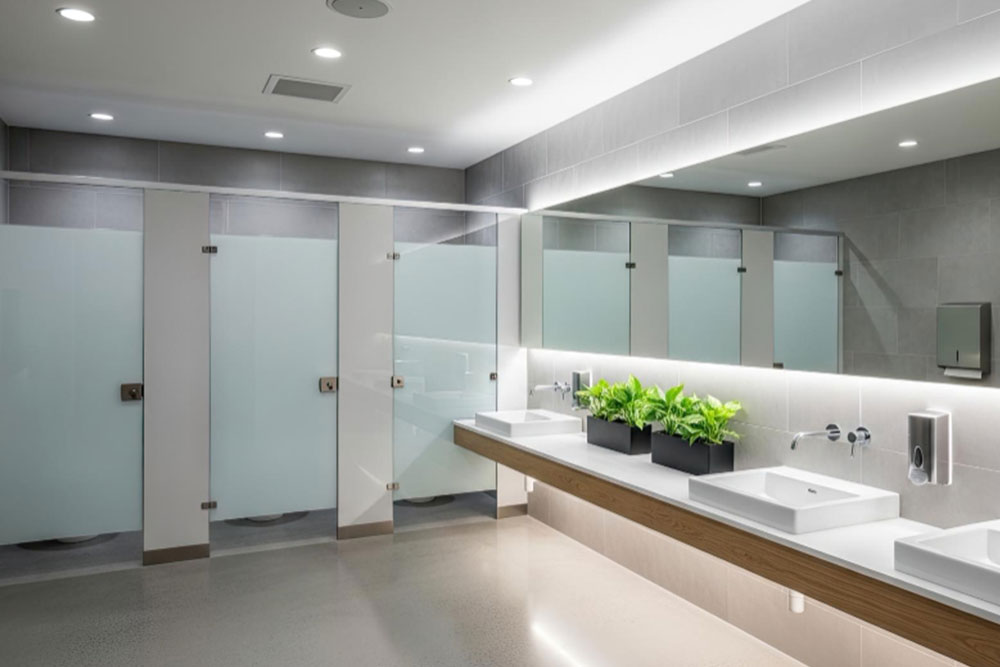
Business owners in Raleigh who are renovating a restaurant, office, retail store, or medical suite usually discover that the best type of flooring for bathrooms is not the one that looks best in a showroom, since a restroom takes more water, more foot traffic, and more cleaning chemicals per square foot than almost any other room in the building.
Our team coats commercial bathroom floors across North Carolina, so the comparison below covers the materials Raleigh facility managers ask about most, why moisture and grout decide how they age, and where a polyaspartic polyurea coating fits.
What A Commercial Restroom Floor Has To Handle
A restroom floor sees standing water near sinks, splashes around toilets and urinals, mop water every day, and sanitizing products that wear down weaker finishes, all while hundreds of people may cross it in a week at a busy storefront or restaurant.
North Carolina summers add humidity to that load, and a floor that holds moisture in its joints or pores can develop odor, staining, and loose surfaces long before the rest of the room looks tired, which is why the flooring choice in a restroom deserves more scrutiny than a hallway or an office.
For that reason, a restroom floor is best judged by what it looks like after two years of daily mopping rather than on the day it is finished, and that is the standard we apply when we recommend a surface to a Raleigh business owner.
How Common Restroom Flooring Materials Compare
Ceramic and porcelain tile
Tile is a familiar choice and looks clean when new, but every grout line is a place where moisture, soap residue, and grime collect, and grout needs regular sealing and scrubbing to keep restrooms smelling fresh and looking presentable.
Natural stone
Natural stone such as slate has an attractive texture that helps traction when wet, yet it is porous and generally needs chemical sealing once or twice a year, which adds a recurring maintenance task to a facility manager’s list.
Bare or polished concrete
Concrete is one of the more affordable choices, especially for a ground-floor restroom, and it can be stained or polished for a finished look, but it is a porous material that needs periodic sealing to keep liquids from soaking in.
Polyaspartic polyurea coating
A polyaspartic polyurea coating is applied over the concrete you already have and leaves one continuous surface with no grout lines, which is why we recommend it for restrooms that need to stay hygienic with limited upkeep.
Why Polyaspartic Polyurea Suits Raleigh Restrooms
Our coatings are built to resist liquid penetration, which can lower the chance of slip injuries on a wet floor, and they hold up to scratches, dents, peeling, and fading in the high-traffic areas where a restroom takes the most punishment.
Because the product is available in many colors and textures, a restaurant can match the restroom to its dining room while a medical office can choose a calm, clean palette, and the texture can be adjusted to add grip where customers and staff walk on damp floors.
Installation is quick as well. We grind the slab, repair cracks, apply a tinted polyaspartic polyurea base coat, broadcast color chips, and seal everything with a high-solids topcoat, and the work is complete in one day in most cases, with the floor ready for traffic about 24 hours after completion.
Many Raleigh businesses cannot close a restroom for a week, so a one-day schedule often decides the question before cost or color ever comes up.
Choosing The Right Option For Your Building
The answer depends on the building, since a retail shop with a lightly used restroom has different needs than a hospital wing or a restaurant that serves a lunch crowd, and the condition of the slab underneath also matters.
A new tile floor in a restroom that already has a sound concrete slab means demolition, setting beds, and curing time, while a coating can be applied over the existing slab once our crew has ground and repaired it, so the project is usually shorter and creates less debris.
If you want to see the difference, our page on commercial bathroom floor coating shows the colors and textures we install, and our comparison of tile versus polyaspartic coatings goes into more detail on how the two age.
Our crews are full-time Guardian employees rather than subcontractors, and each floor is backed by a lifetime warranty, so there is one accountable team behind the work.
Facilities in nearby Oxford and Pinehurst are served by our North Carolina crews as well, and you can read more about our work on our Raleigh, NC page.
When you are ready to compare options for your restroom, our team will gladly look at your floor in person, and you can request a free estimate to get started.
FAQs
Is tile still a good choice for a commercial bathroom?
Tile can look excellent, and it remains a common option, but its grout lines collect moisture and grime and need regular sealing and scrubbing. For a busy commercial restroom that gets mopped daily, a continuous surface with no grout is easier to keep clean, which is why many owners ask us about a coating instead.
How long does it take to coat a commercial bathroom floor?
In most cases we complete the installation in one day. Our crew grinds the concrete, repairs cracks, applies the base coat and color chips, and seals the floor with a topcoat, and the floor can be driven on 24 hours after completion. We confirm the exact schedule during your free estimate.
Will a coated bathroom floor be slippery when wet?
Texture is part of the system. We broadcast color chips into the base coat and scrape the surface smooth to leave a non-slip finish, and extra texture can be added for more traction in wet areas. Tell us how the restroom is used during the estimate and we will recommend the right finish.
Can I coat the existing concrete in my restroom?
In most cases yes, because the coating bonds into the slab after our crew grinds it and fills any cracks or divots. We look at the concrete during the free estimate to confirm it is a good candidate for coating, and we tell you plainly if a repair is needed first so there are no surprises on installation day.